
A Starter Guide to Raising Chicks for Your Backyard Flock
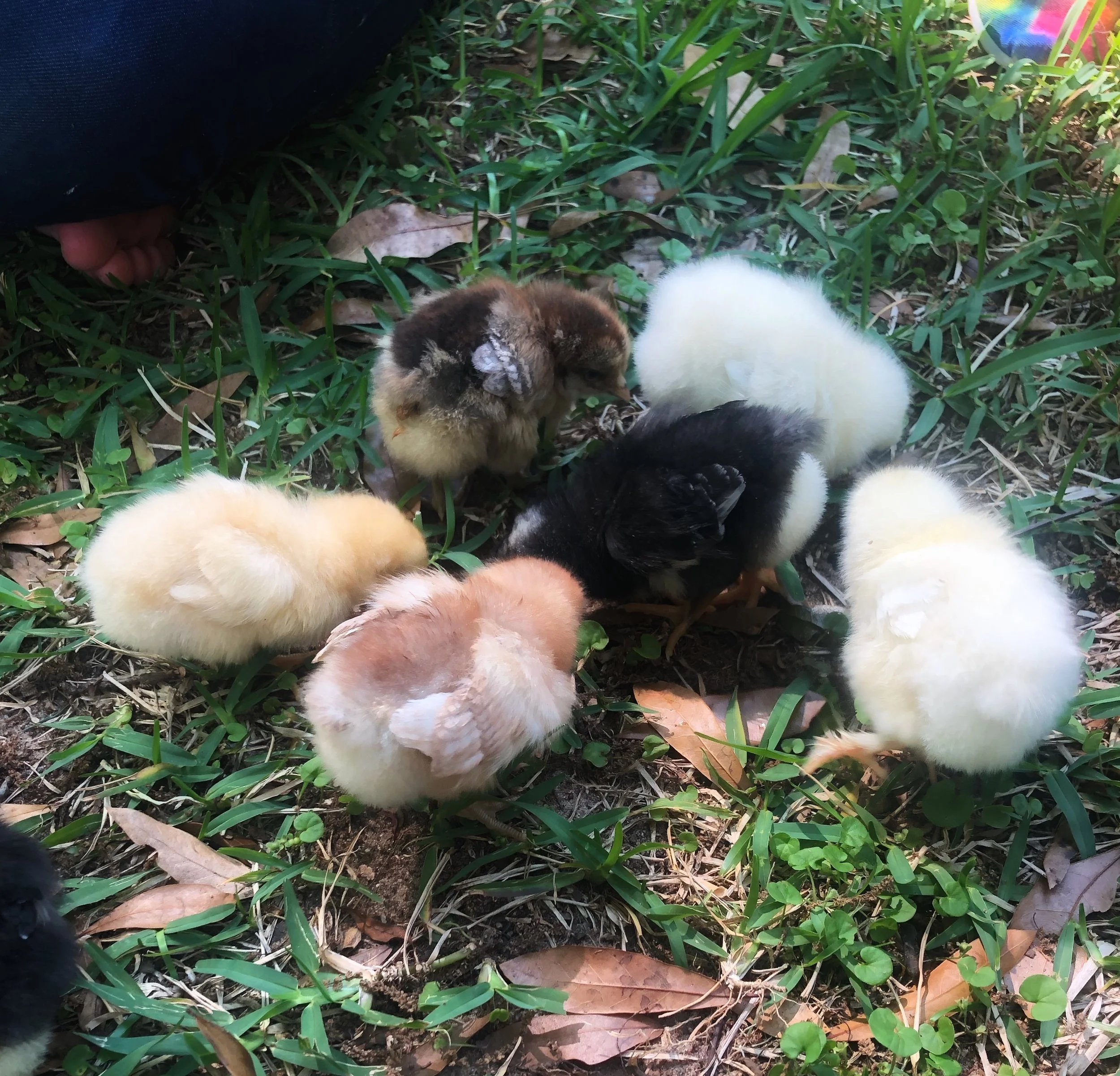
Who can resist those sweet little fuzzy bums?
In the same way that puppies and kittens are irresistible, baby chickens are absolutely adorable. For my family, raising chicks is one of the best parts of having a backyard flock. Interacting with these sweet little balls of floof is something we all anticipate as we get closer to spring.
Caring for chicks is easy and fun, though it can become a stinky, messy experience as they get older. Having a proper set-up will help you avoid some of the mess and make the process more enjoyable. Let’s talk about choosing birds, as well as selecting equipment, and caring for your new chicks.
Decide How Many Chickens You Want
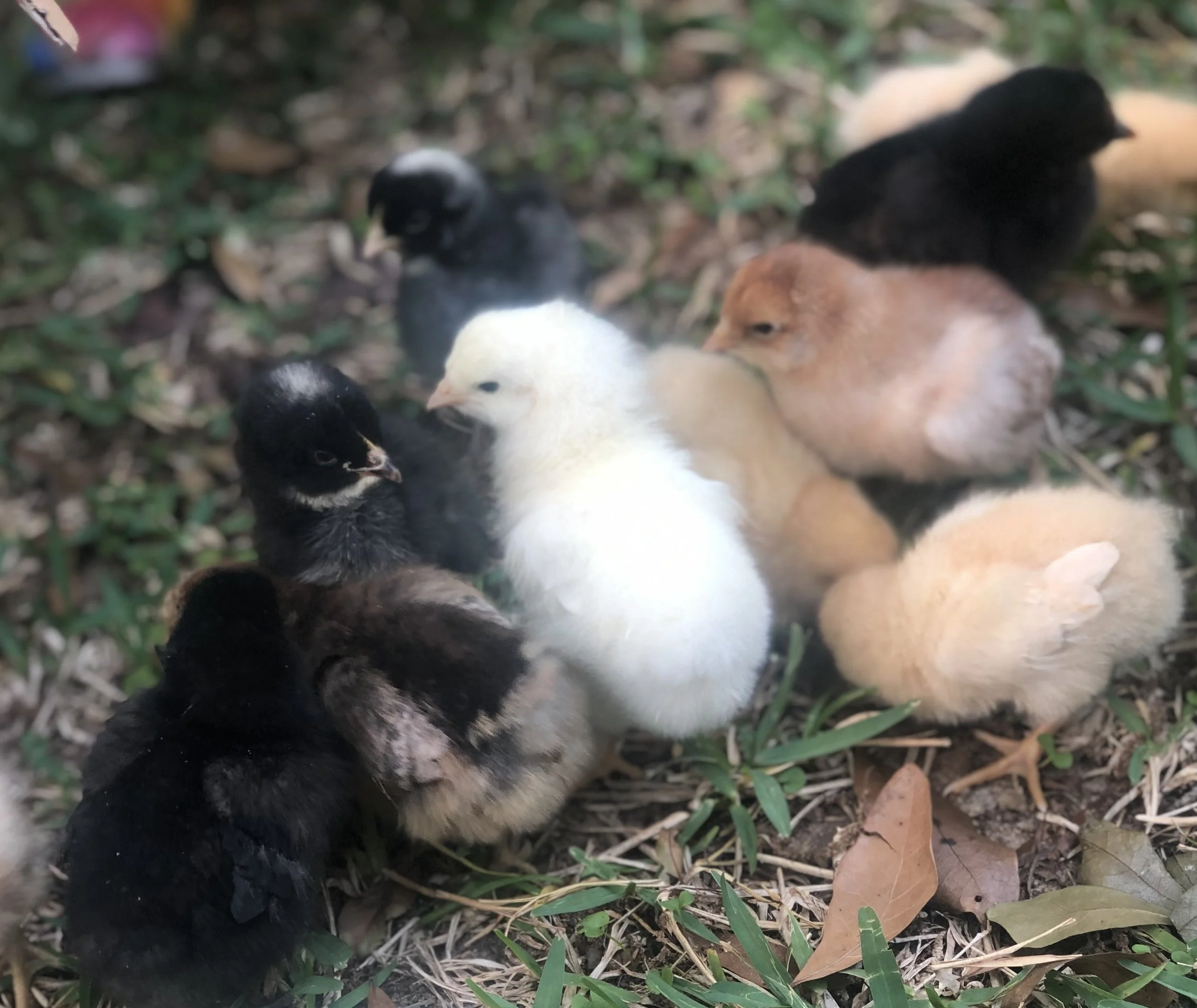
I always end up with more chicks than I need!
The first step to raising chickens is deciding how large a flock you want to care for. If your primary purpose is egg production, start by doing the math on how many eggs you eat in a week. For my family of five, eggs are a staple. We eat about two dozen a week.
Something to keep in mind when making this calculation is that not all breeds are the same when it comes to egg laying. Some breeds lay large eggs relative to their body size, while others lay eggs that are more proportionate. Some breeds of chickens lay only one or two eggs a week, while others lay nearly every day.
It’s also important to understand that egg production is still a way off from the day your chicks arrive. Some breeds begin laying earlier than others, but you should assume it will be about six months before you see any steady action.
Another issue to be aware of is the seasonality of egg laying. Most chickens take a significant break from laying in the winter. They molt, or shed their feathers, and then put their energy into regrowing their plumage. During this time, they won’t lay many, if any, eggs. I’ll touch on this process and break it down further another day.
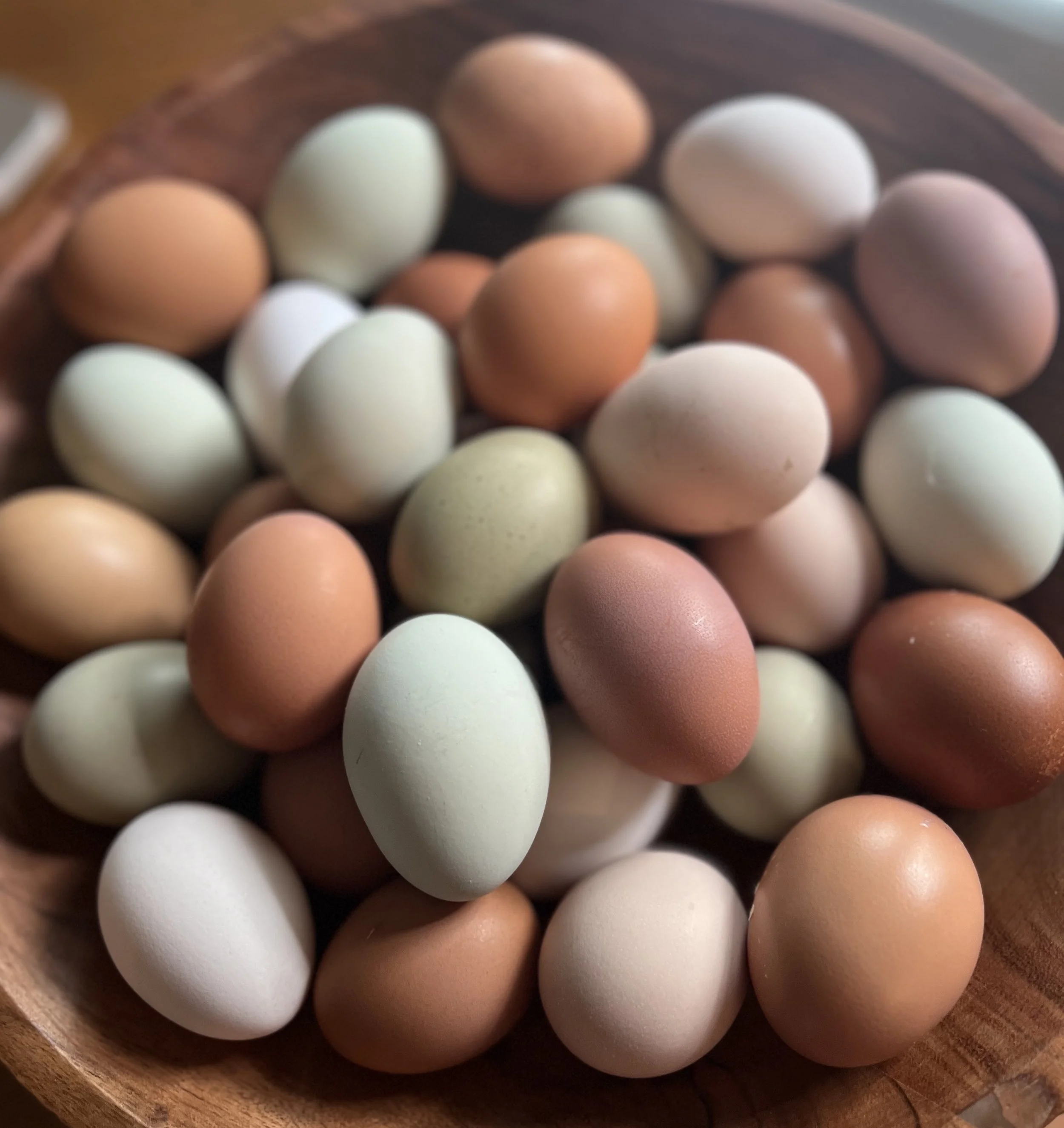
It takes a range of breeds to create a mix like this
In general, you can assume each chicken will lay three to four eggs per week. For my family of five, the goal is two to three dozen eggs weekly. So, if we plan for the high end of three dozen eggs and the low end of three eggs per bird per week, twelve chickens is the magic number.
That said, during laying season, we always have an excess. Our neighbors are more than happy to tolerate the rooster because we share generously. We tend to choose chicken breeds that are prolific layers, and we don’t consistently eat three dozen eggs a week.
If you want a dozen eggs weekly, you can reasonably expect that from three to four chickens. If you want two dozen, aim for eight. Another consideration I would be remiss not to mention is that things happen—you will eventually lose a bird or two along the way.
Select Breeds
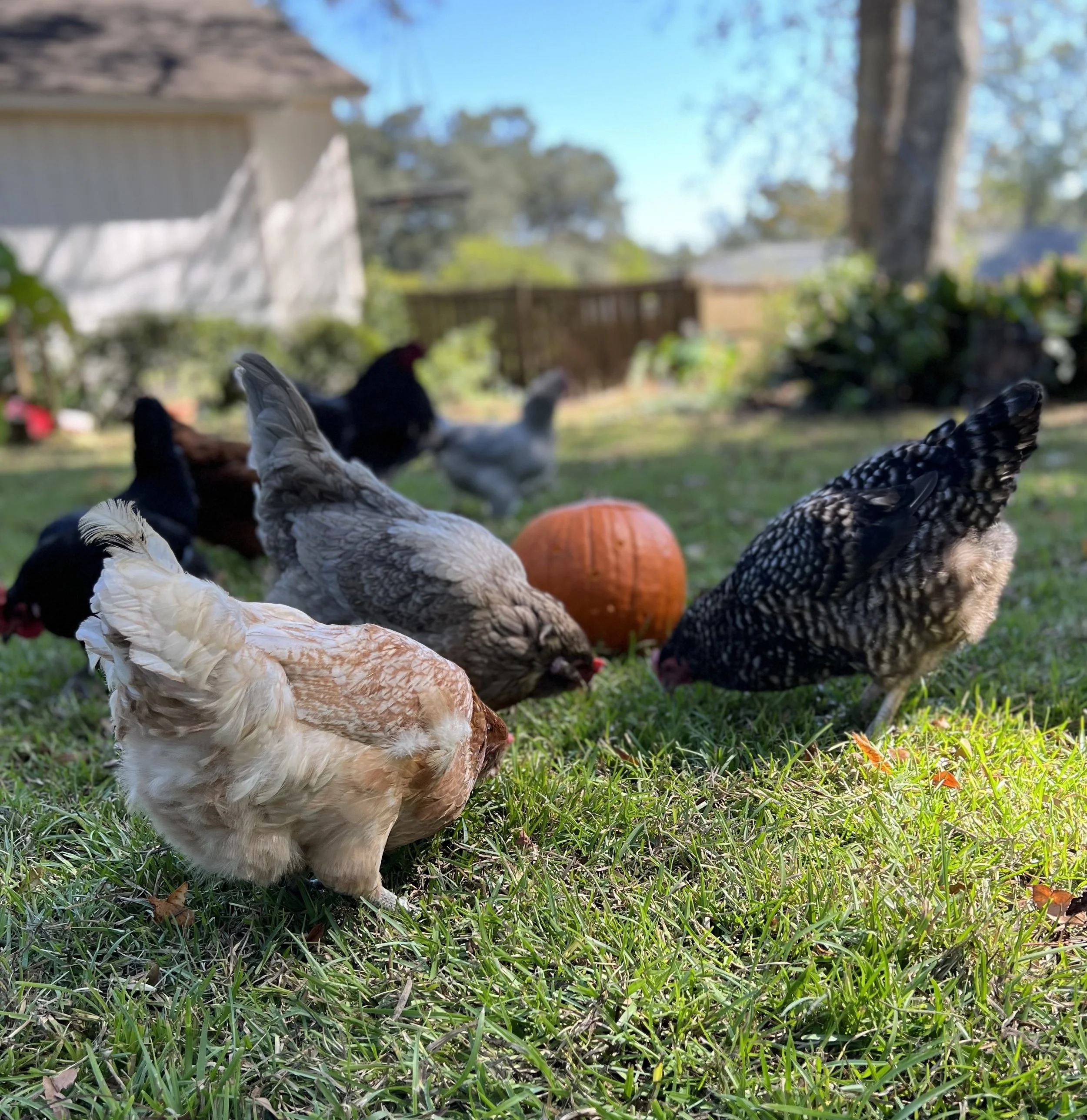
I find that a mixture of breeds creates a peaceful flock
If you want to know more about breeds, I will be compiling guides to help you through the process. You can check out my guide to family-friendly breeds. Some birds are great layers, some have great food conversion rates. There are many factors that go into selecting the right breeds.
Layers, Meat Birds, or Dual Purpose
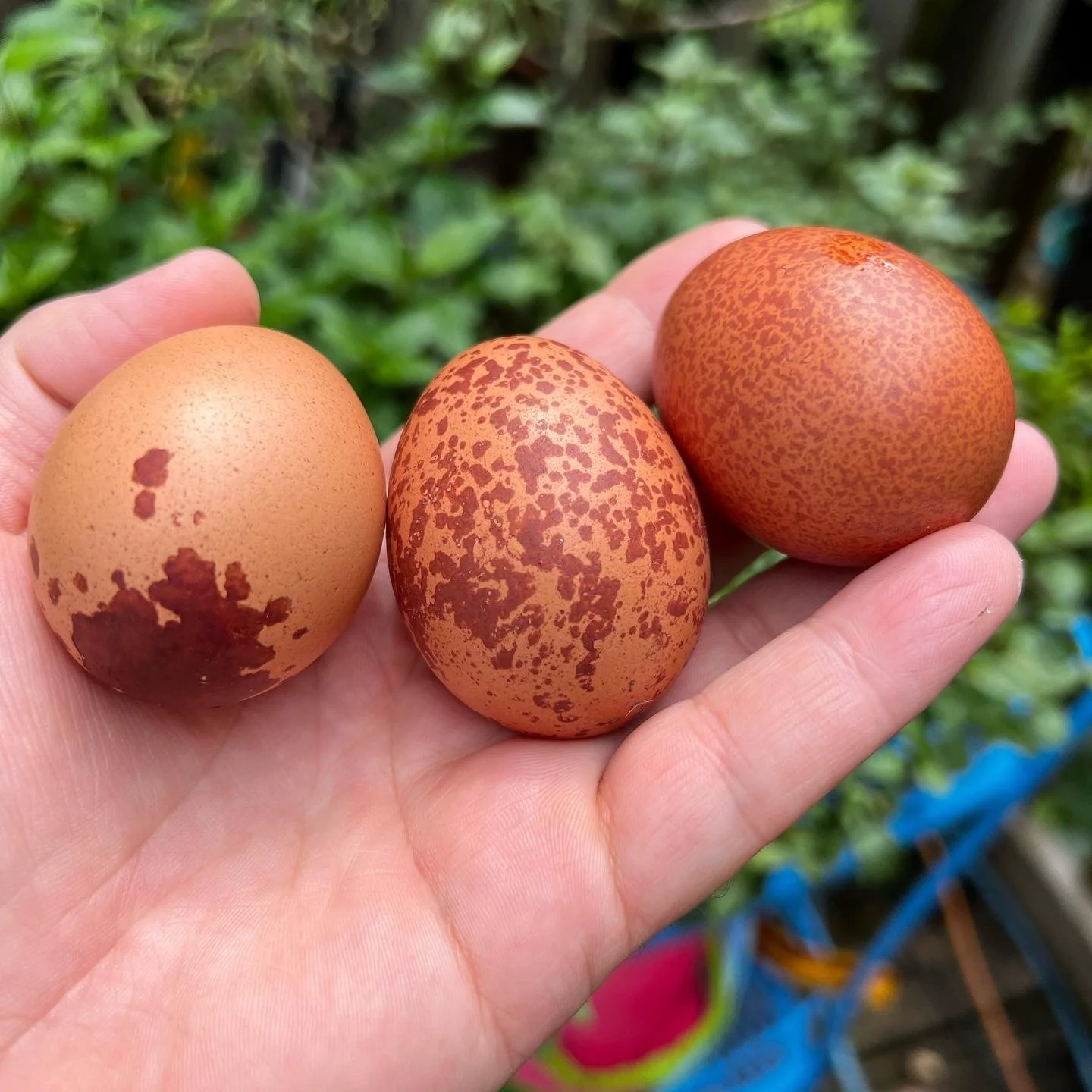
When they first start laying you might see this.
Think about your purpose for raising backyard chickens. Are you looking to have egg-laying pets? Do you want to raise chickens specifically for meat? Or would you prefer dual-purpose Chickens that are good layers and also large enough for eating?
When it comes to meat birds, owning chickens is a completely different process. I’ll assume you’re mainly here for the eggs and the experience, and I’ll cover meat birds another time. For now, let’s talk about good layers and dual-purpose flocks.
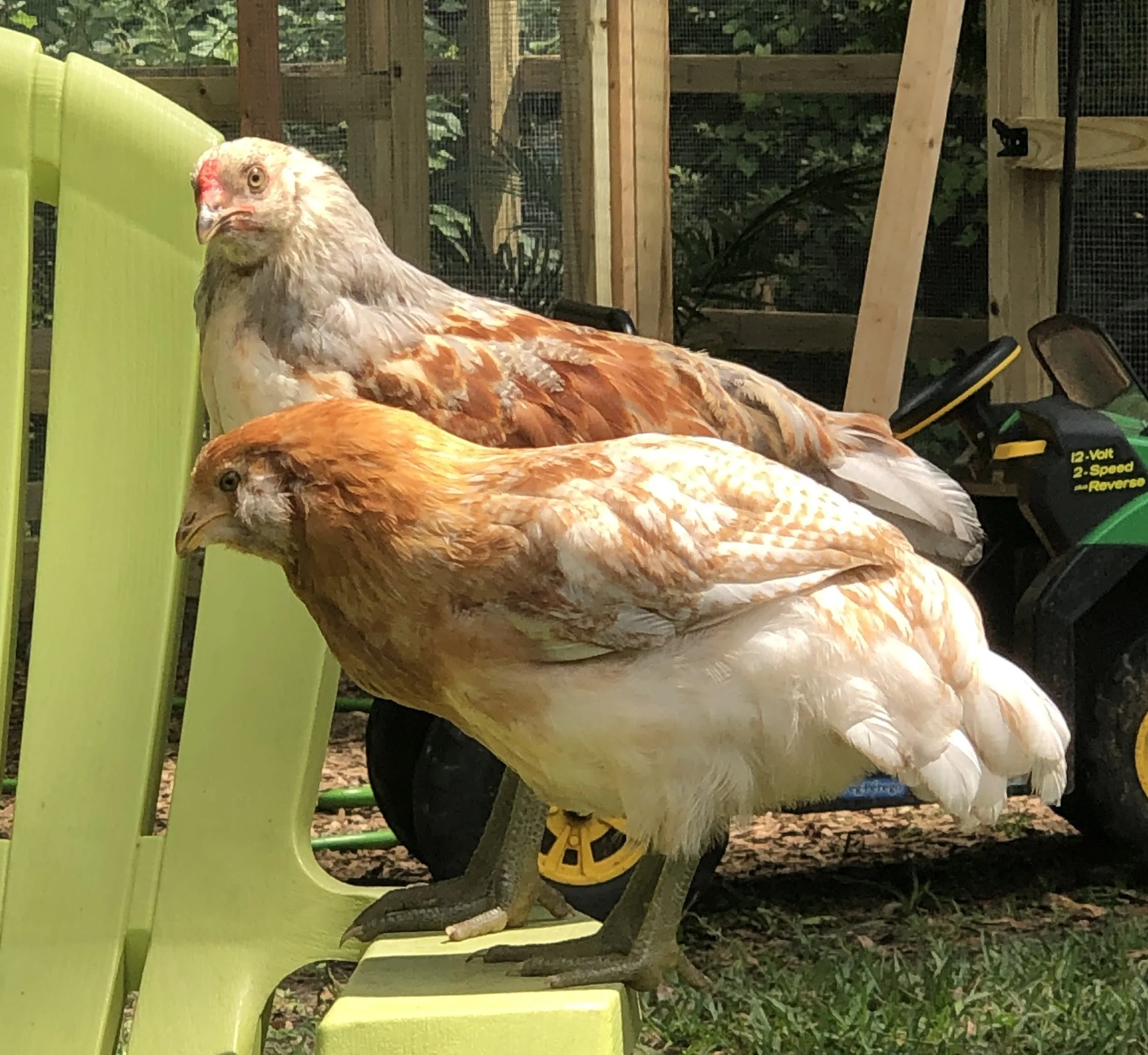
Young Easter Egger hen and rooster.
One of the main differences between these two classifications is feed conversion rate. As mentioned earlier, some breeds produce large eggs relative to their body size. These breeds, such as Leghorns, ISA Browns, and Anconas, have smaller bodies, are good foragers, and lay many large eggs.
If you want dual-purpose birds, Orpingtons, Wyandottes, and Plymouth Rocks are reliable and popular options. These breeds are easy to find. Other good dual-purpose choices include Australorps, Marans, and Easter Eggers. These are larger birds, but they also lay many large eggs.
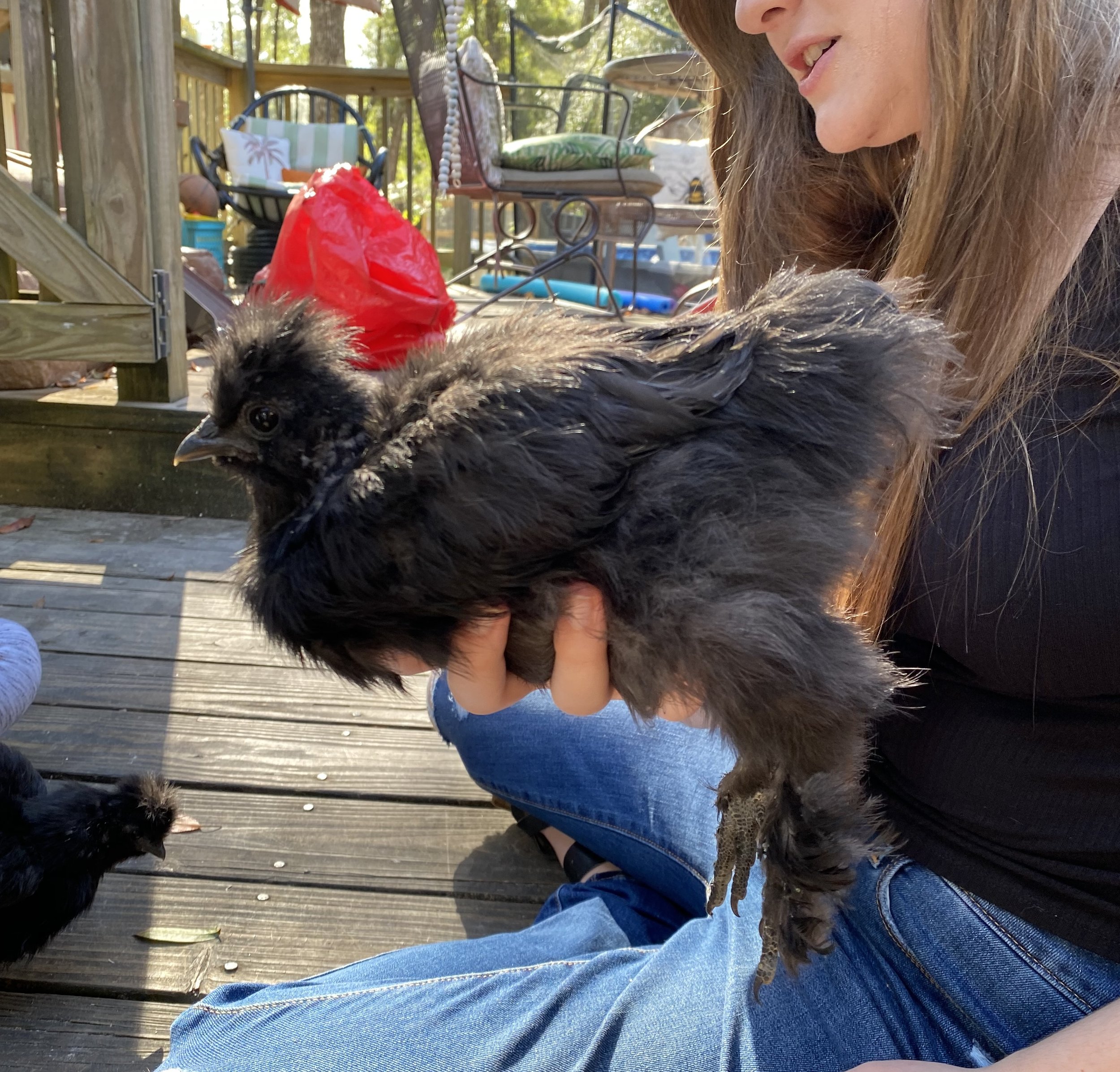
Silkies are great pets, but their eggs are tiny!
Some fancier breeds may look interesting and beautiful, but their egg production is usually subpar. Silkies lay relatively few eggs, and their eggs are tiny. Sultans, Asseels, and anything bantam-sized are not going to be good producers.
Egg Colors
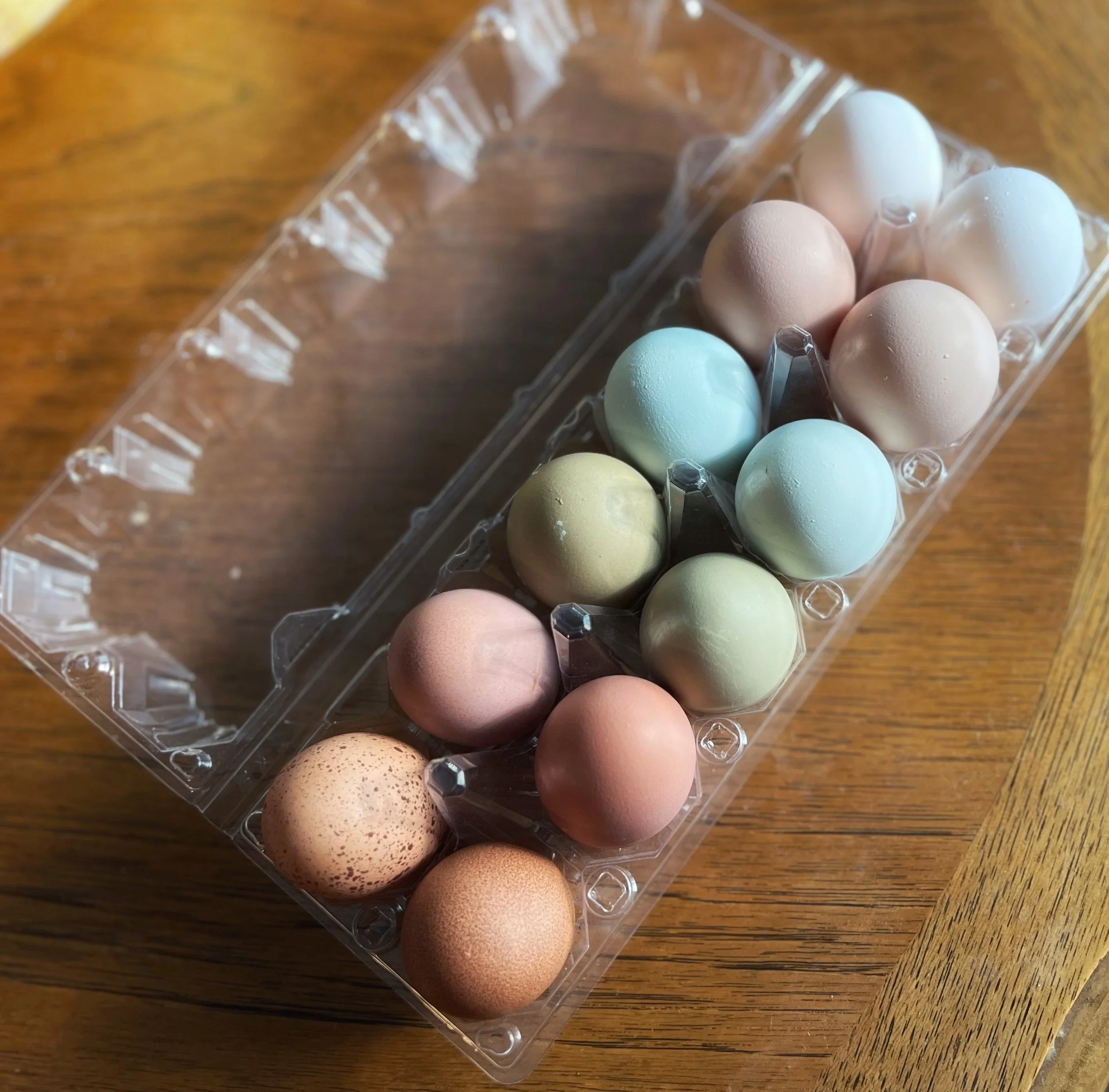
We didn’t need to dye Easter Eggs this year!
I’m a sucker for a colorful egg basket, so I select my breeds for egg color in addition to personality. I like to have a couple of white layers, three or four tinted layers, and then a range of about five different brown layers.
Easter Eggers are a delightful breed that we simply adore. They are mid-sized chickens with typically friendly dispositions. They lay large, tinted eggs that can be light blue, green, or occasionally pink. I call them pink. You could say they’re just light brown. I prefer to see them as pink because it feels a little whimsical, and I like that.
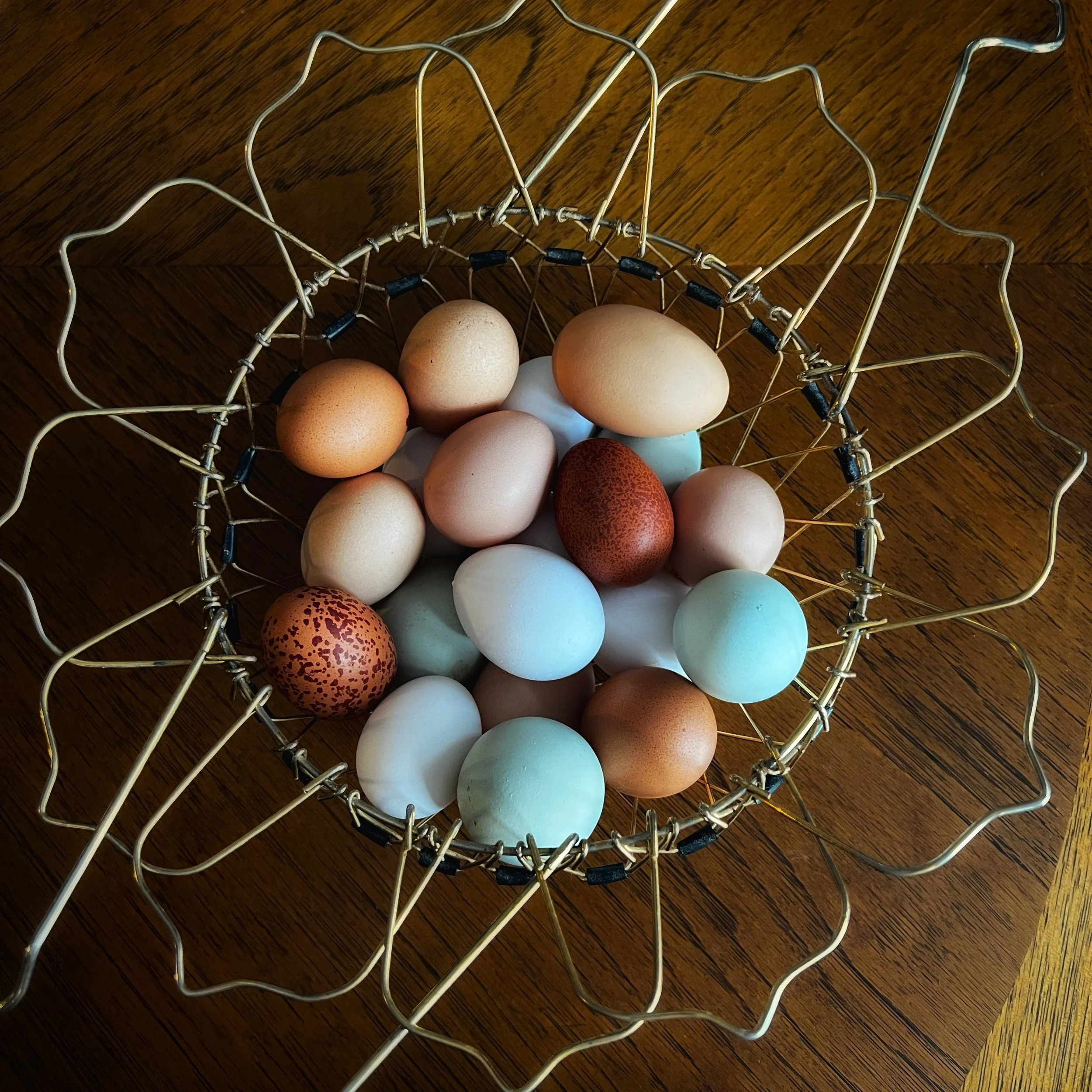
I love to see how my egg basket evolves with each year.
Olive Eggers are fun and produce different shades of olive-green eggs. These chickens are a combination of a dark brown layer and a blue egger. Ameraucanas lay some of the truest blue eggs, but they are rare and expensive. Legbars also lay blue eggs and are easier to find.
Leghorns and Anconas are great white egg layers. I find that white egg layers tend to be less friendly but more prolific. These two breeds are excellent foragers and lay a lot of eggs for many years. Our brown Leghorn, Siena, is one of our oldest and most spry birds. She’s skittish, but she has been an excellent addition to our flock.
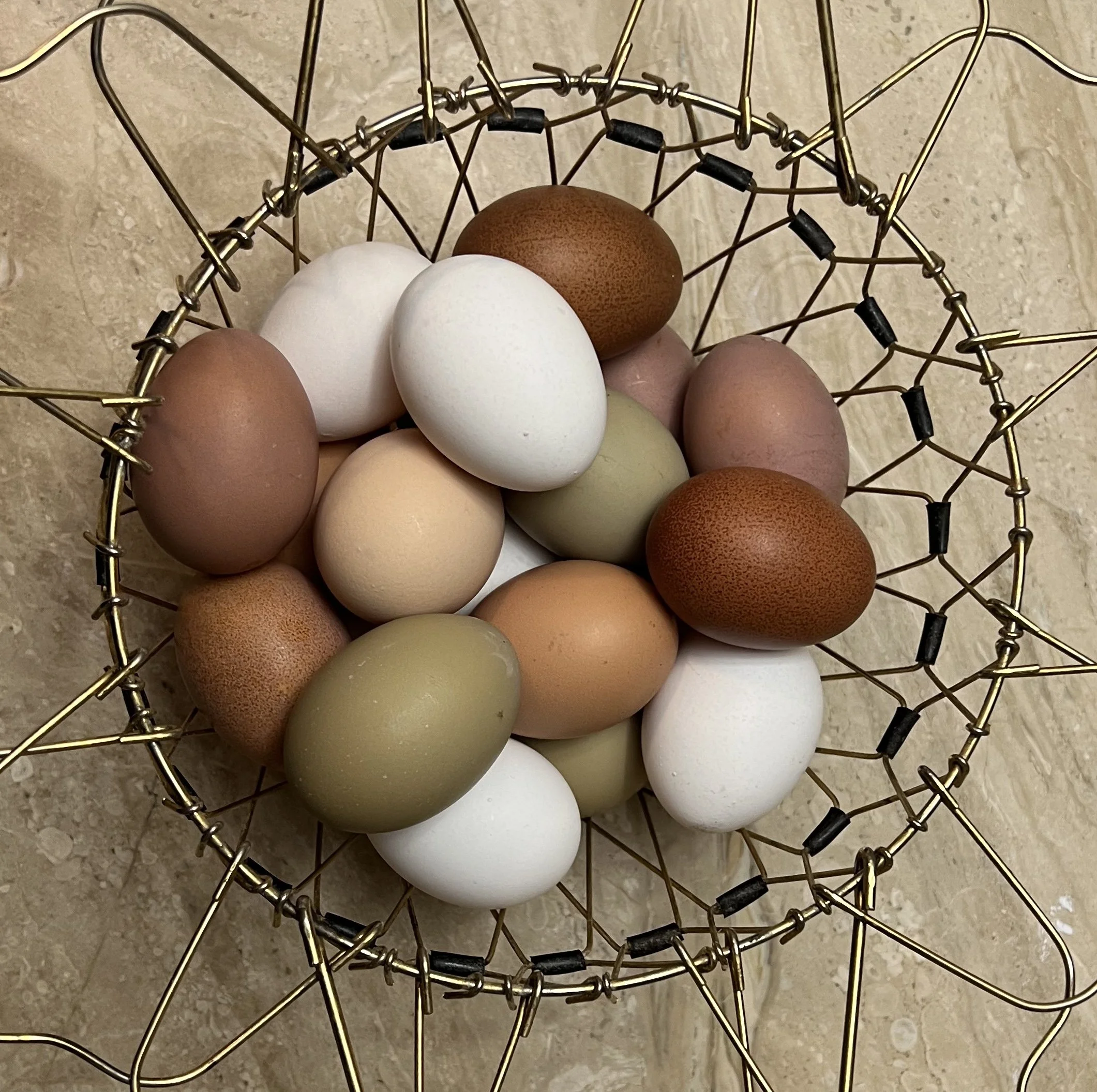
This deep stone/olive colored egg was one of my favorites
Most white eggs are pretty much the same, but that’s not the case for brown layers. There are hundreds of different shades of brown eggs, and they are all beautiful and unique. In fact, each hen lays a unique egg. If you pay close attention, you’ll be able to tell them apart.
For dark brown and speckled eggs, you won’t find a breed that comes close to Marans. Welsummers also lay gorgeous mahogany eggs, so I don’t want to discount them. Black Copper Marans lay the darkest eggs of all, deep chocolate brown!
Temperament
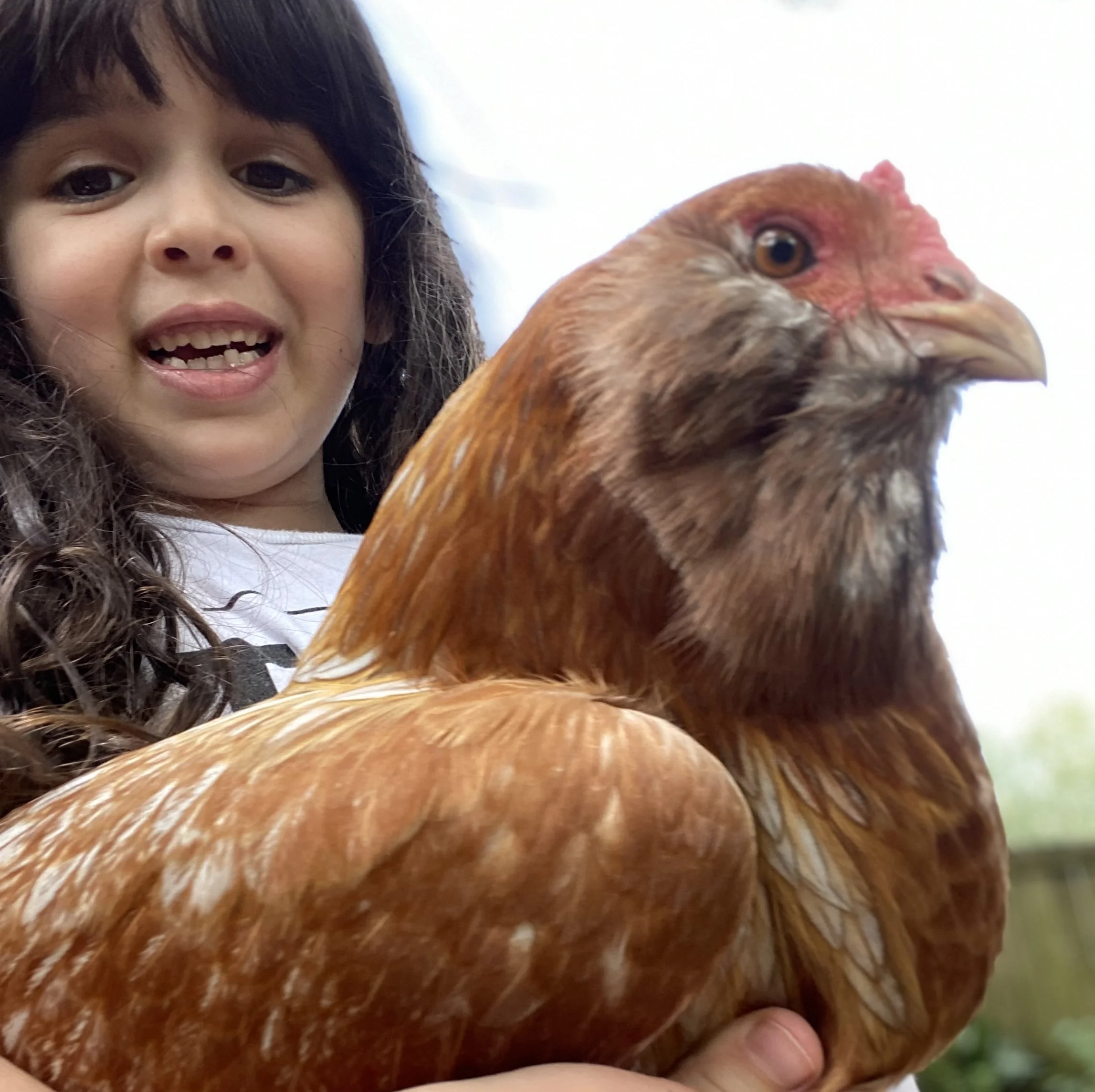
Sweet Dolly the wheaten Easter Egger
If temperament is important to you, there are some breeds that make excellent pets. Silkies are lousy layers, but they are friendly and small, making them a great choice for those looking for a pet that’s good with kids.
We have loved every Easter Egger we’ve ever had. They are docile and curious. Orpingtons are wonderfully fluffy and tend to enjoy human company as well. I also favor Marans for their combination of traits, including gorgeous eggs, feathered feet, and amiable dispositions.
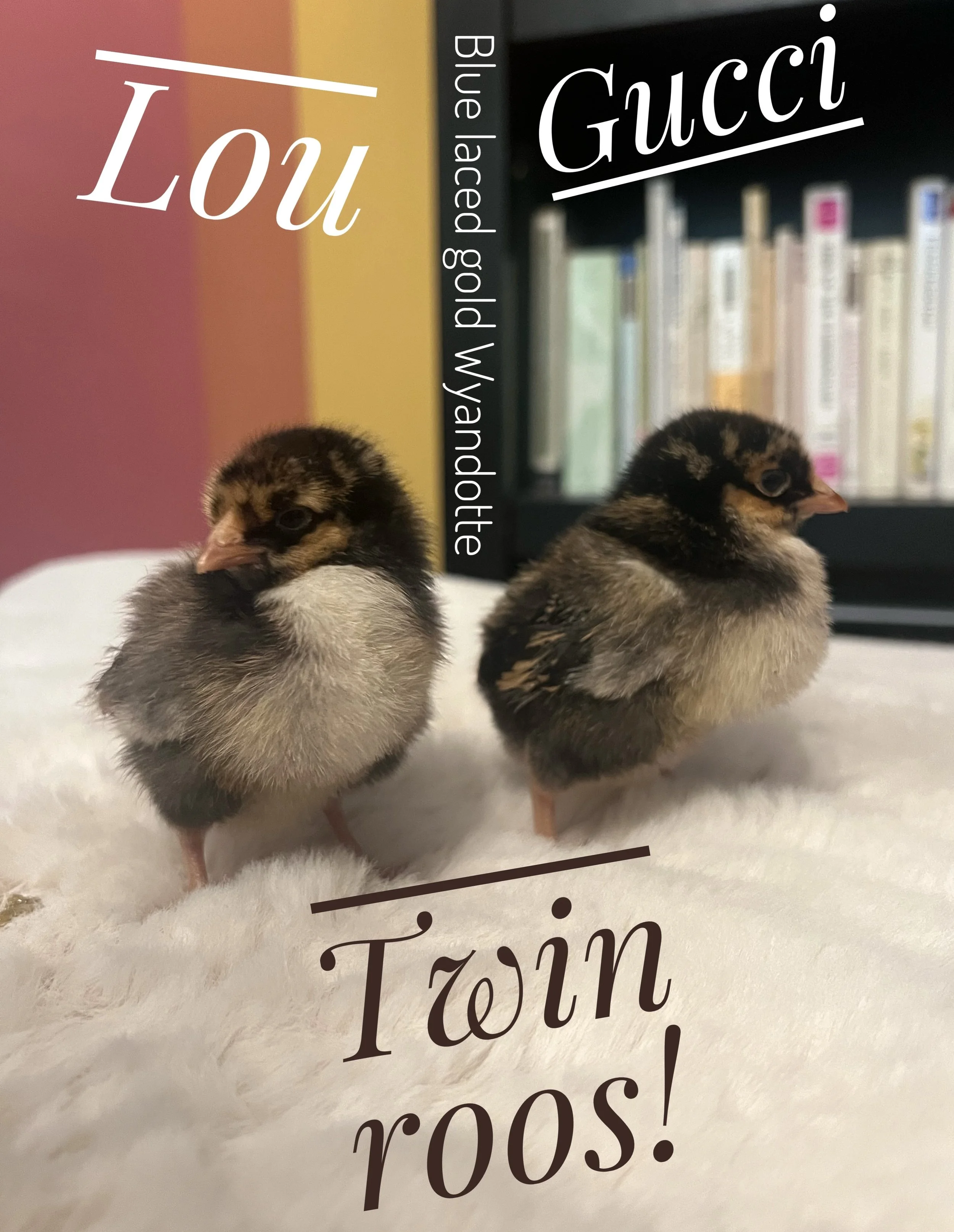
These two boys grew into gorgeous roosters.
ISA Browns are bred for egg production and are also quite friendly and docile. The ISAs we’ve had tend to stay close to their people. We have also had a couple of Wyandotte roosters that were friendlier than most. They are a large breed, and the roos seem content to be intimidating without actually throwing their weight around.
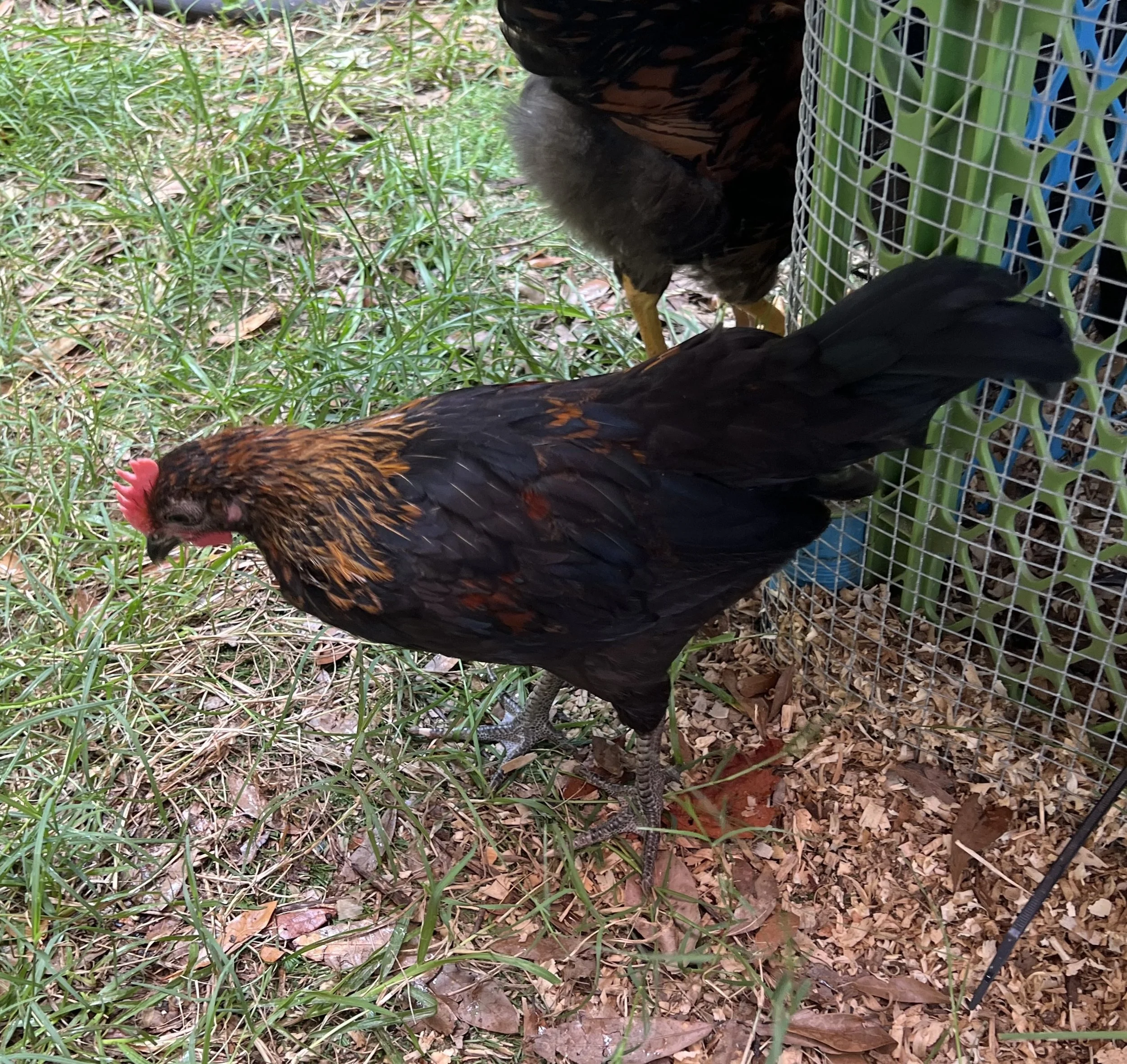
Marty, the current leader of our flock, at about 10 weeks old.
Just know that all roosters can be jerks, especially during their first spring. Once they reach maturity and egg-laying season begins, their personalities tend to take a turn for the worse.
Order Chicks or Hatching Eggs
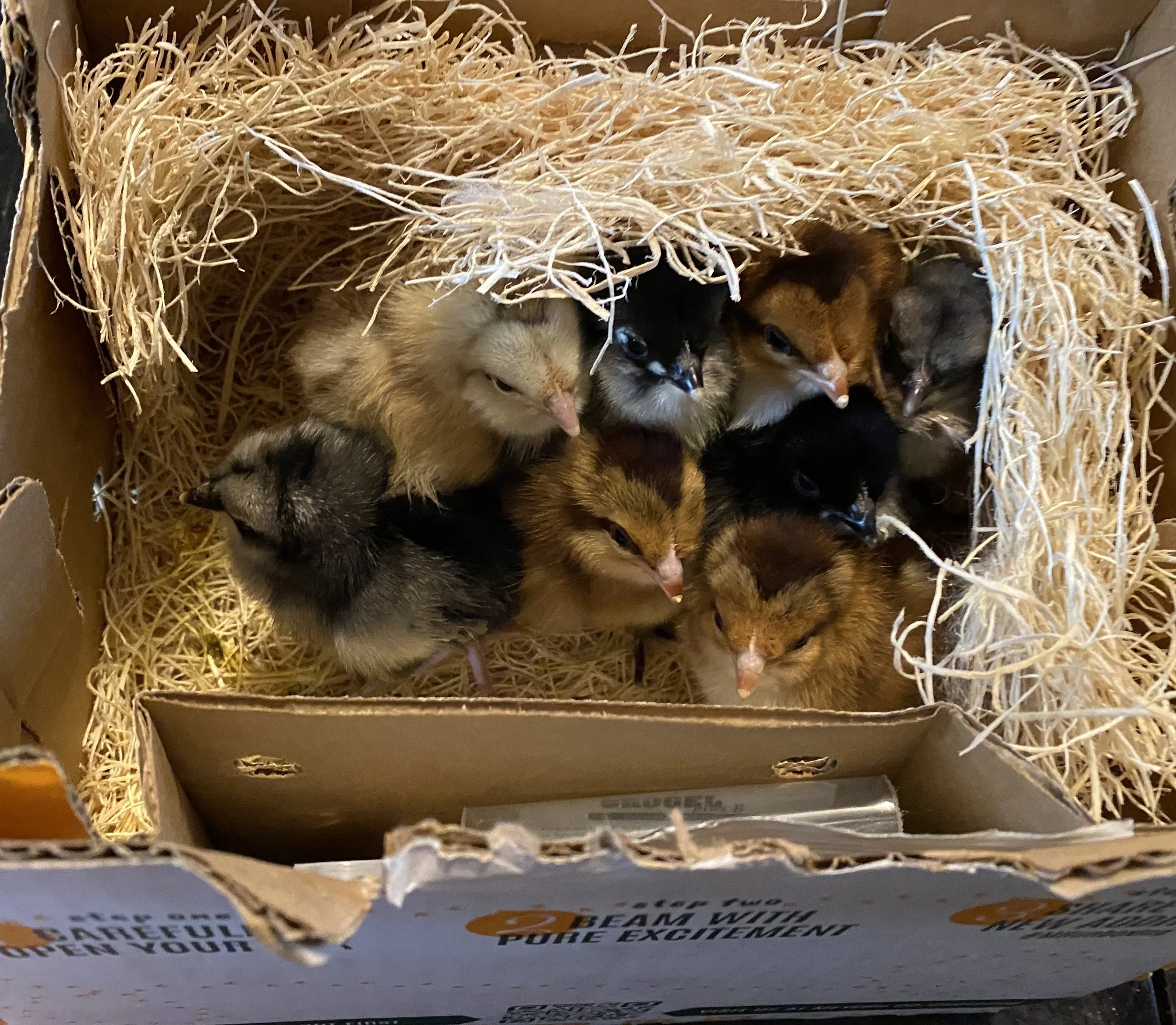
Chicks shipped overnight from a hatchery
Chicken keeping has become very popular in recent years, so I recommend starting early. If you’re ordering hatching eggs, you’ll have more wiggle room, but you also run the risk of ending up with a flock of roosters.
For your first foray into chicks, I recommend purchasing live chicks from a reputable source that reliably sexes them. I’m a fan of shopping local if you have the option, but many hobby farmers don’t know how to sex chicks accurately. Larger hatcheries are often more reliable in this regard.
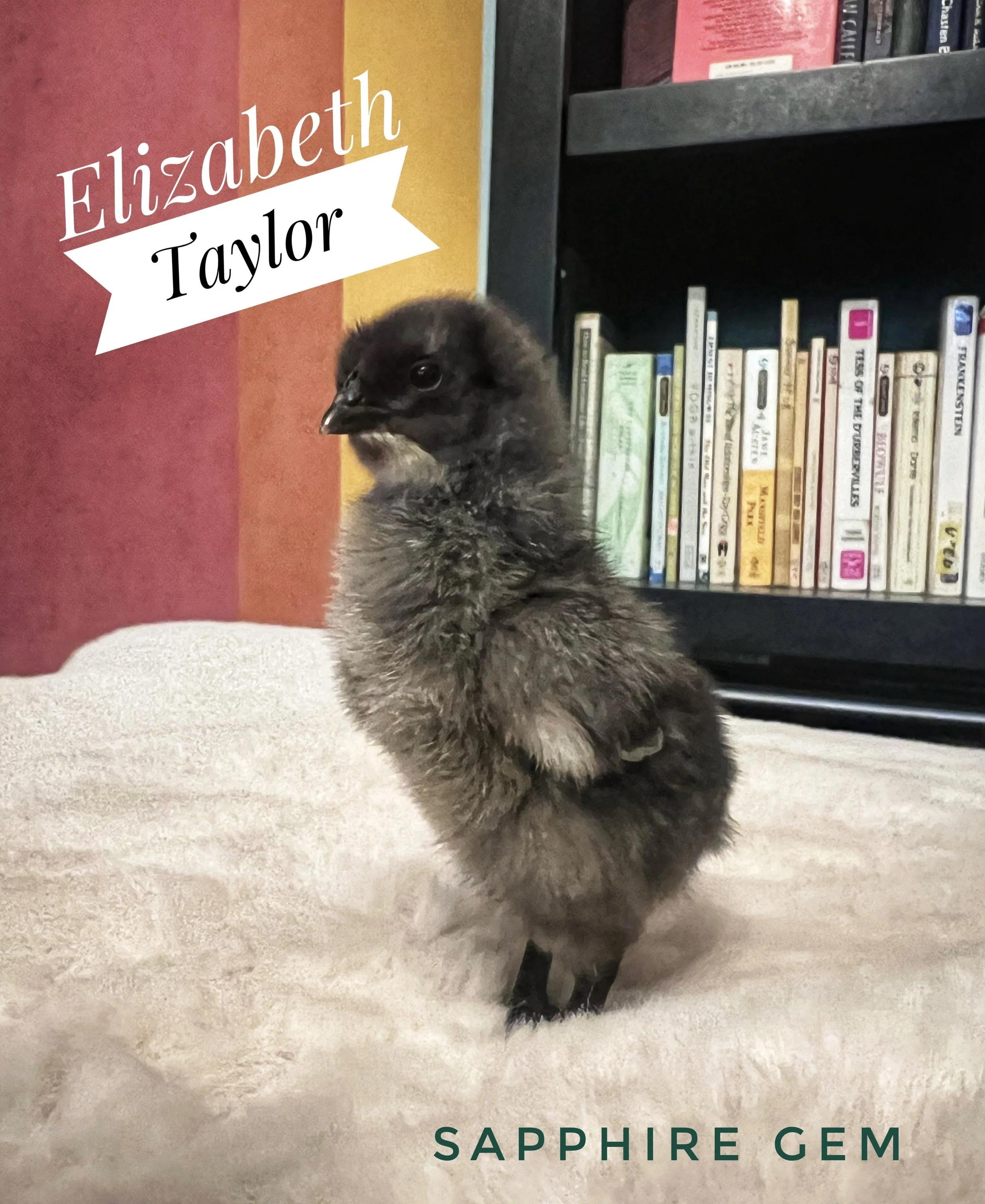
Elizabeth Taylor is a stunning Sapphire Gem that we found at Tractor Supply
Tractor Supply is a popular place to find chicks when you’re getting started. As much as I love them for supplies, I’ve ended up with quite a few Tractor Supply roosters. I still purchase from them if they have a breed I want, but I go into it prepared for that outcome.
We have a local ACE Hardware that orders from a hatchery. They are reliable, and we have always received healthy chicks from them. Check your local chicken Facebook pages for a similar outlet.
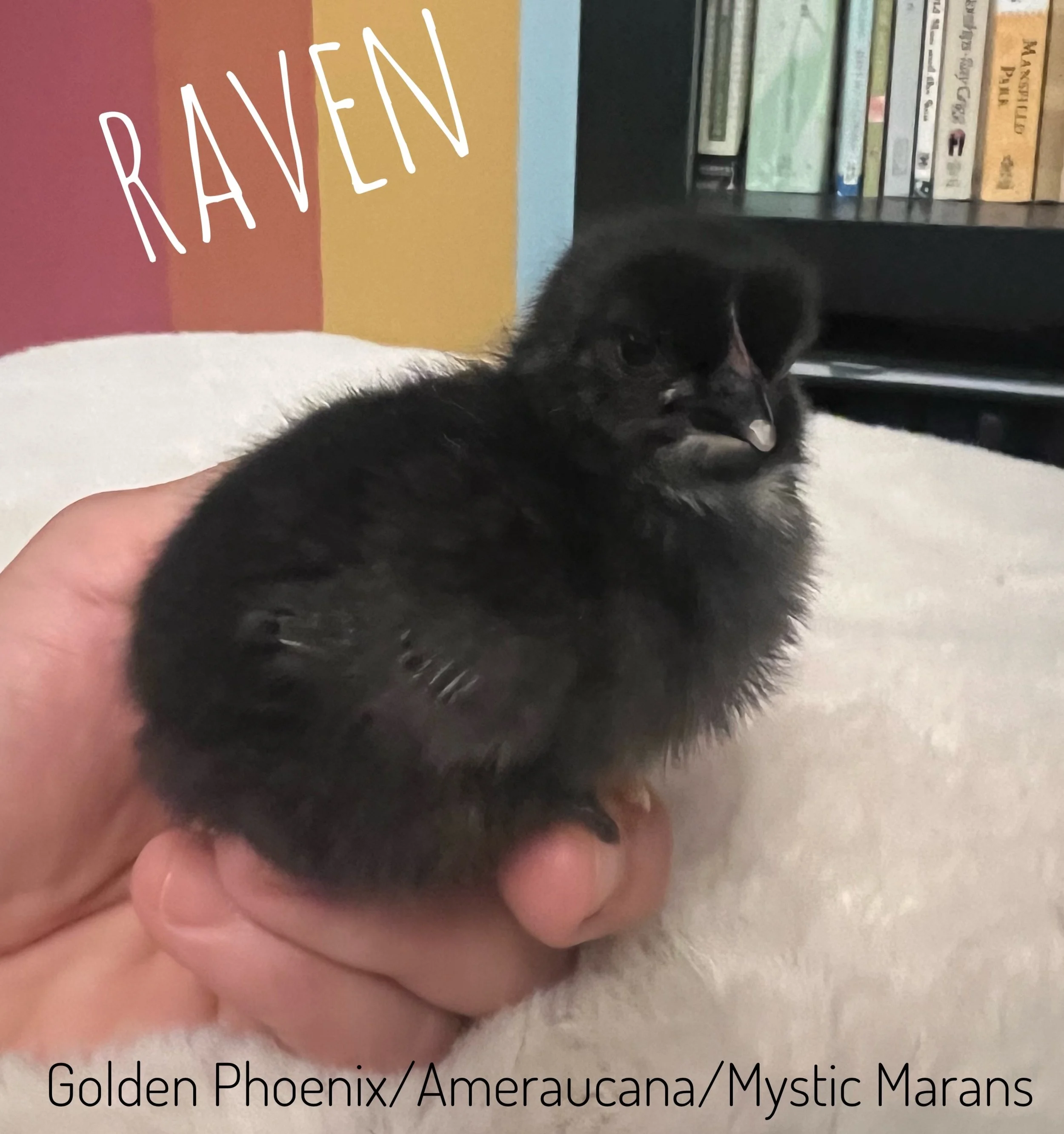
We hatched this sweet little girl and she is a family favorite
We have also ordered chicks directly from a couple of hatcheries. This is a reliable way to find a wide array of breeds. I've had great experiences with both Meyer Hatchery and Murray McMurray.
There are quite a few options for mail-order chicks. It may sound risky to mail day-old baby chicks, but my experience is that it's entirely safe. Most hatcheries have a minimum order, so there are enough of them to keep each other cozy.
Prepare a Brooder
When your chicks arrive, you should have a brooder set up and ready to welcome them. They will need food, water, and a heat source as soon as you bring them home, so it's good to get ready ahead of time.
Container
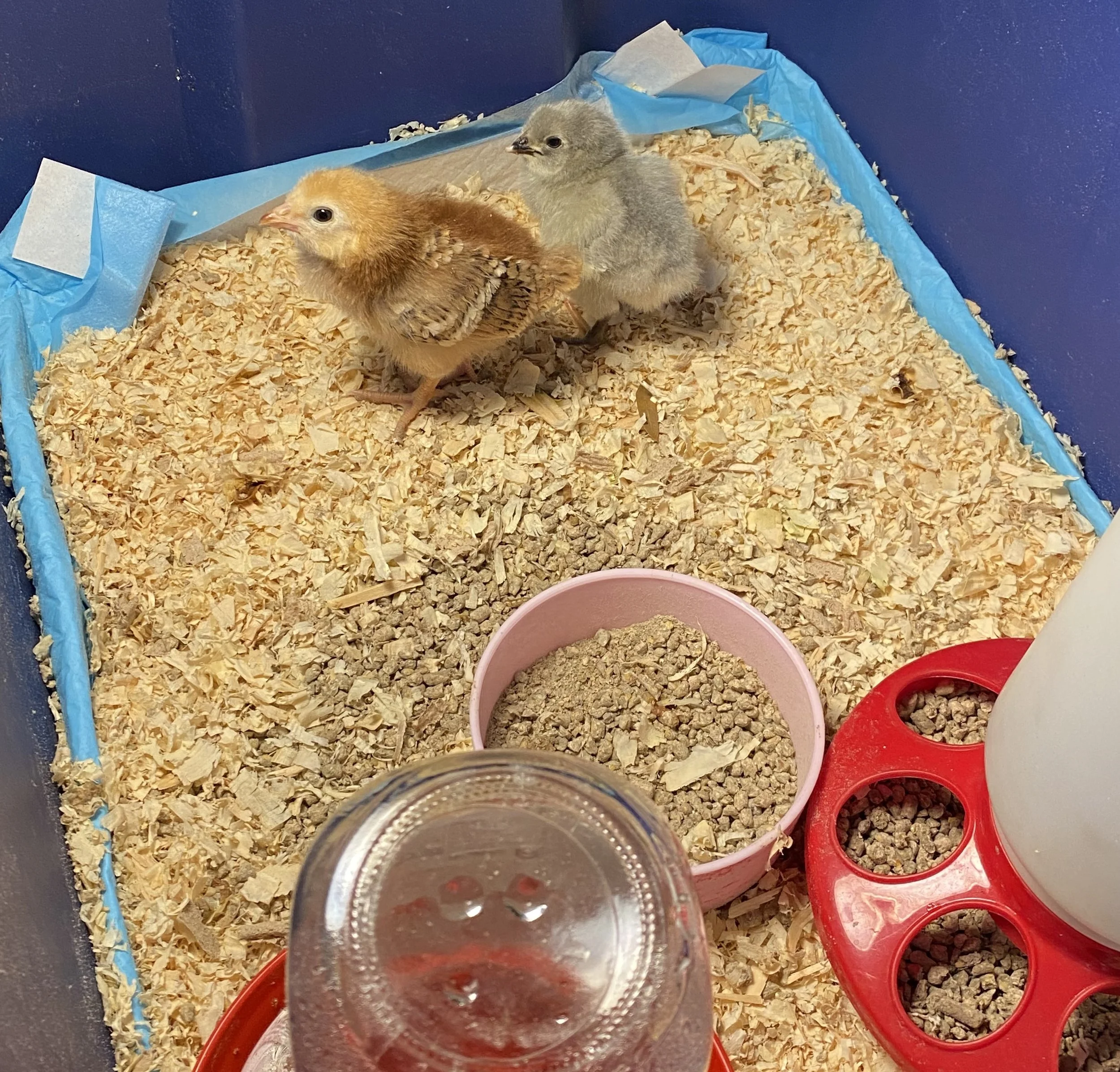
A plastic tote makes a portable and easy to clean brooder
You’ll need a box or container to begin with. If you’re handy, or know someone who is, a wooden brooder is nice to have. Just keep in mind that these are less portable. Mark out a location for your brooder before you start.
We keep our chicks in a smaller brooder for the first four to six weeks, depending on the number of chicks. During this time, they live in a large plastic tote in our family room. This ensures the kids can’t ignore them. We play with them at least once a day for an extended period.
The more time you spend with them at this age, the friendlier they will be. It’s also fun to watch them transition from the fluffy baby stage to sassy adolescence. It may surprise you how quickly they grow in these first months.
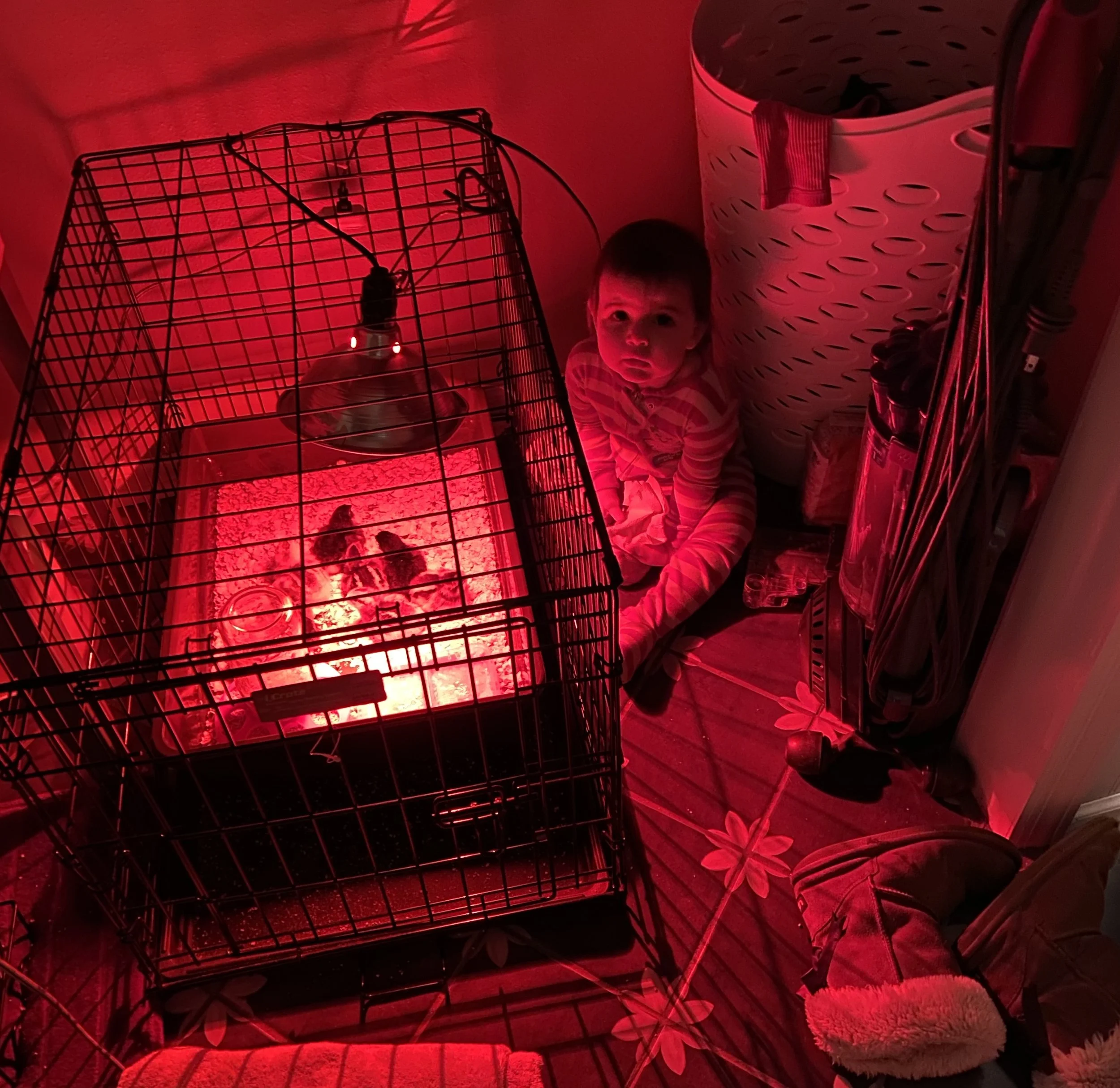
We tried a dog crate one year but they made a total mess. It was fun for the kids though!
We use a large plastic tote with a piece of chicken wire lightly secured to the top. Your chicks will start trying to fly within a matter of weeks, so be ready to cover the top to keep them from getting out and pooping all over your house.
Once our chicks are fully feathered, we move them outdoors, close to the house. We then use one of those large baby gates that can be shaped into a playpen. It’s covered in hardware cloth to protect against predators, and the top is secured. Any time your chicks are outdoors, their enclosure needs to be predator-proof.
Heat Source
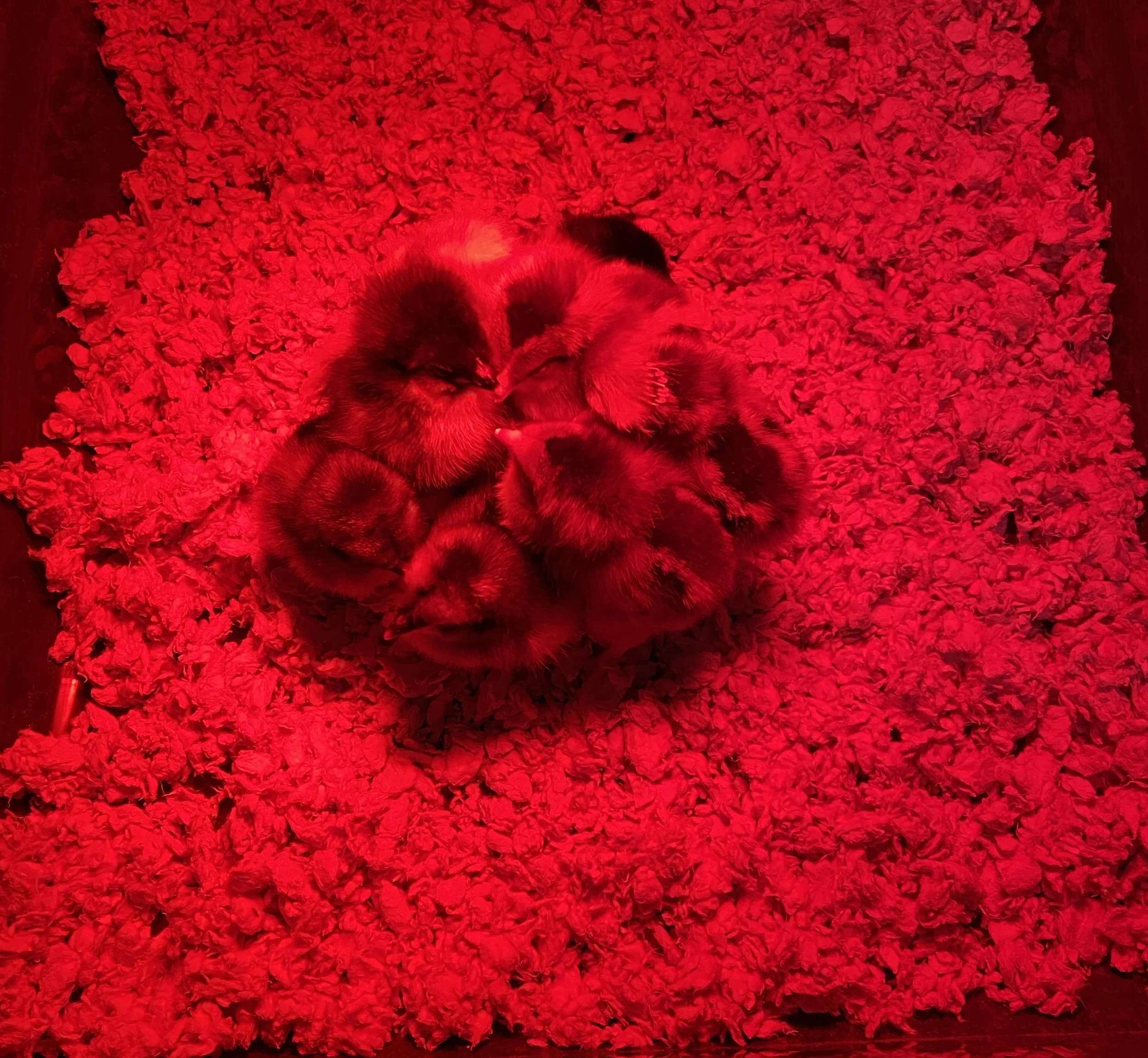
These chicks are cold so they are staying as close together as possible.
Your chicks need a heat source as soon as you can get them under one. You have a couple of options here, but there is an obvious superior choice. Your chicks will need access to a space that is at least 90–95°F. Each week thereafter, you can decrease the temperature by 5°F.
By week six, they will have most of their adult feathers and should be comfortable at around 70°F. You can usually remove the heat source at this point. If you only have a few chicks, you may want to leave it a little longer.
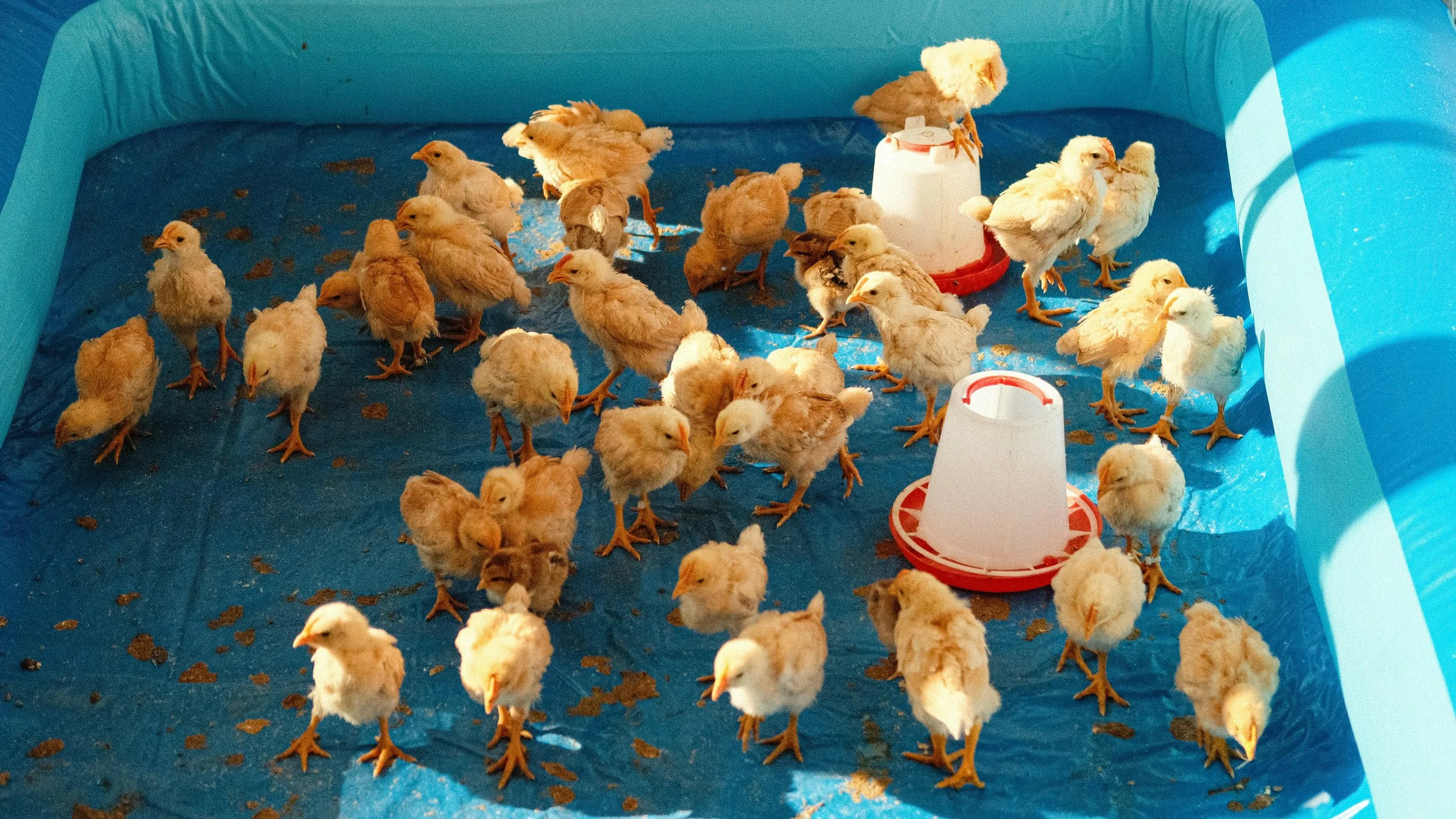
As they get bigger they need less heat and venture further out.
You’ll know if the space is too cold or too hot by your chicks’ behavior. If they are chirping loudly and huddling together, they’re cold. If they’re too hot, they’ll try to stay away from the heat source and from each other.
I’ve used three types of heat sources: a red heat lamp, a ceramic heat bulb, and a brooder plate. Heat lamps are the most dangerous and have the highest incidence of fires, though they are also the most adjustable. Ceramic bulbs provide heat without light, but I’ve found they don’t do a great job of maintaining warmth.
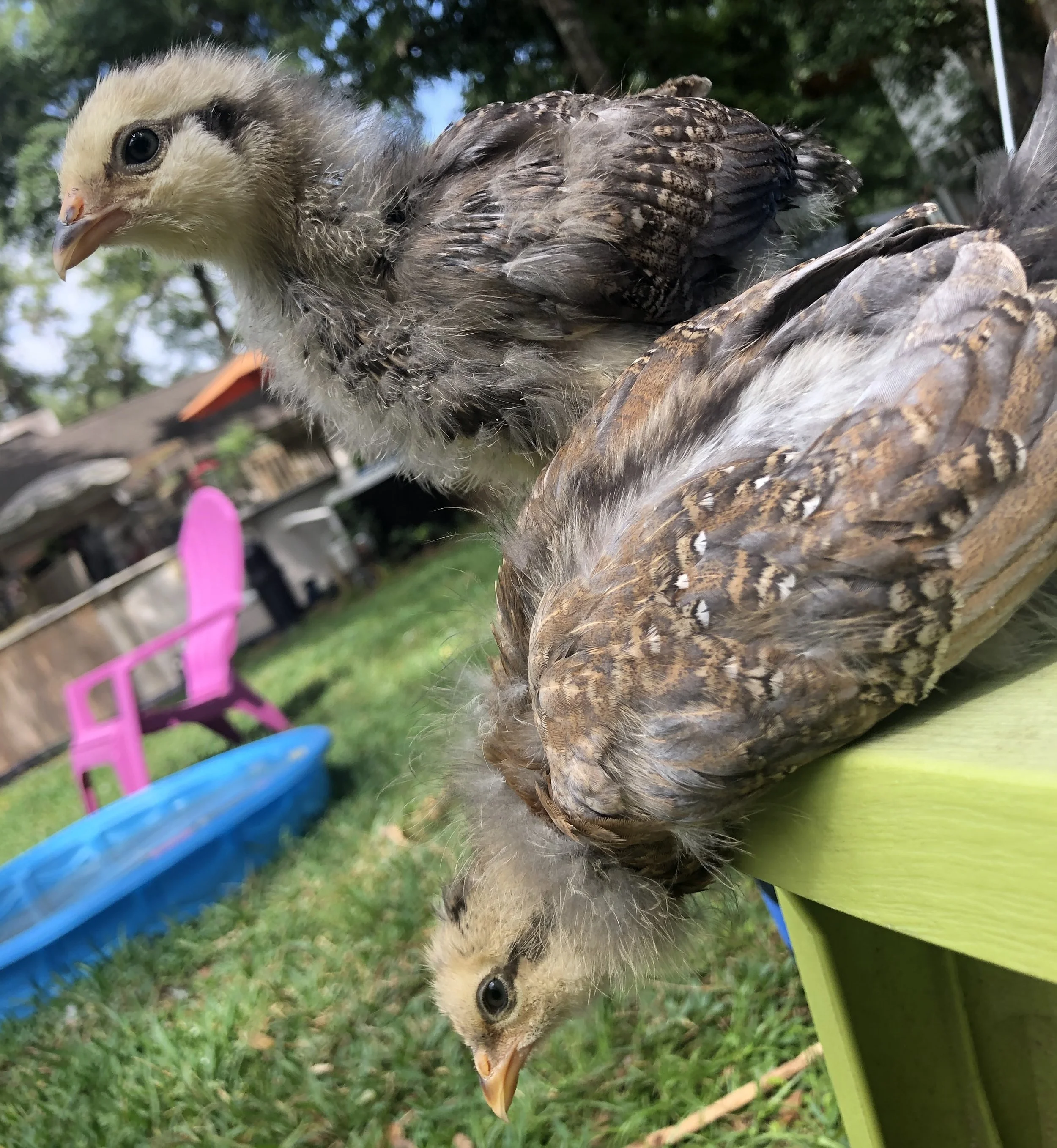
As their adult feathers come in, they will gain more independence
An adjustable heat plate is the safest and most accessible option. I switched a couple of years ago because of the fire risk. A heat plate is exactly what it sounds like—a flat heated plate. It’s adjustable at one end so that as the chicks grow, they aren’t squished and can regulate their temperature more effectively.
The chicks go under the heat plate just like they would under a mother hen. They seem to enjoy this and feel nice and secure underneath.
Litter
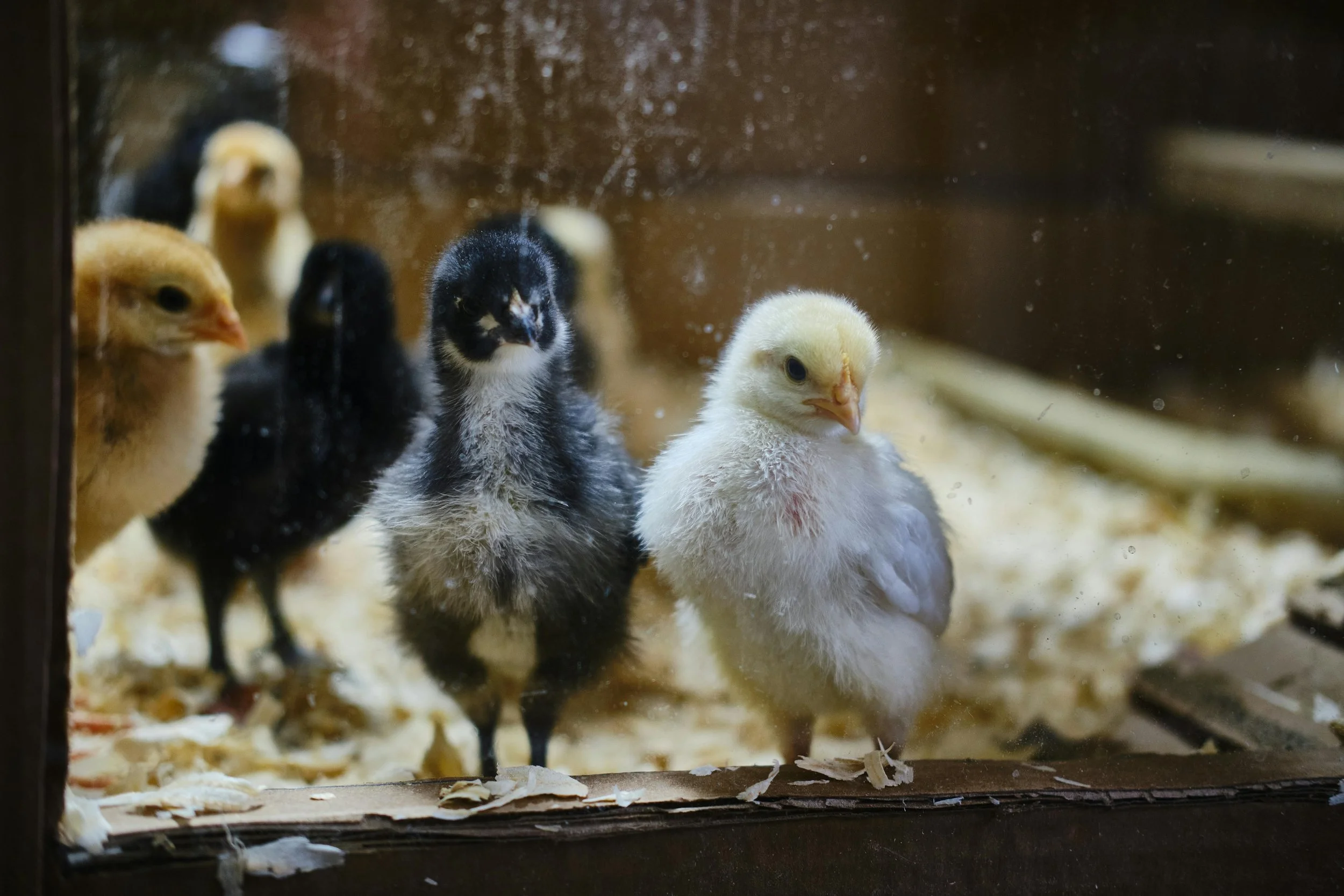
Chicks can be very messy
You’ll want to give your chicks something cozy and absorbent at the bottom of the brooder. This provides traction so they can walk easily and helps keep things much cleaner.
We use pine shavings, the kind you might use in a pet rabbit’s cage. They’re safe and inexpensive. As the chicks grow, you’ll want to clean out the litter more often. If there’s one thing chickens do well, it’s poop.
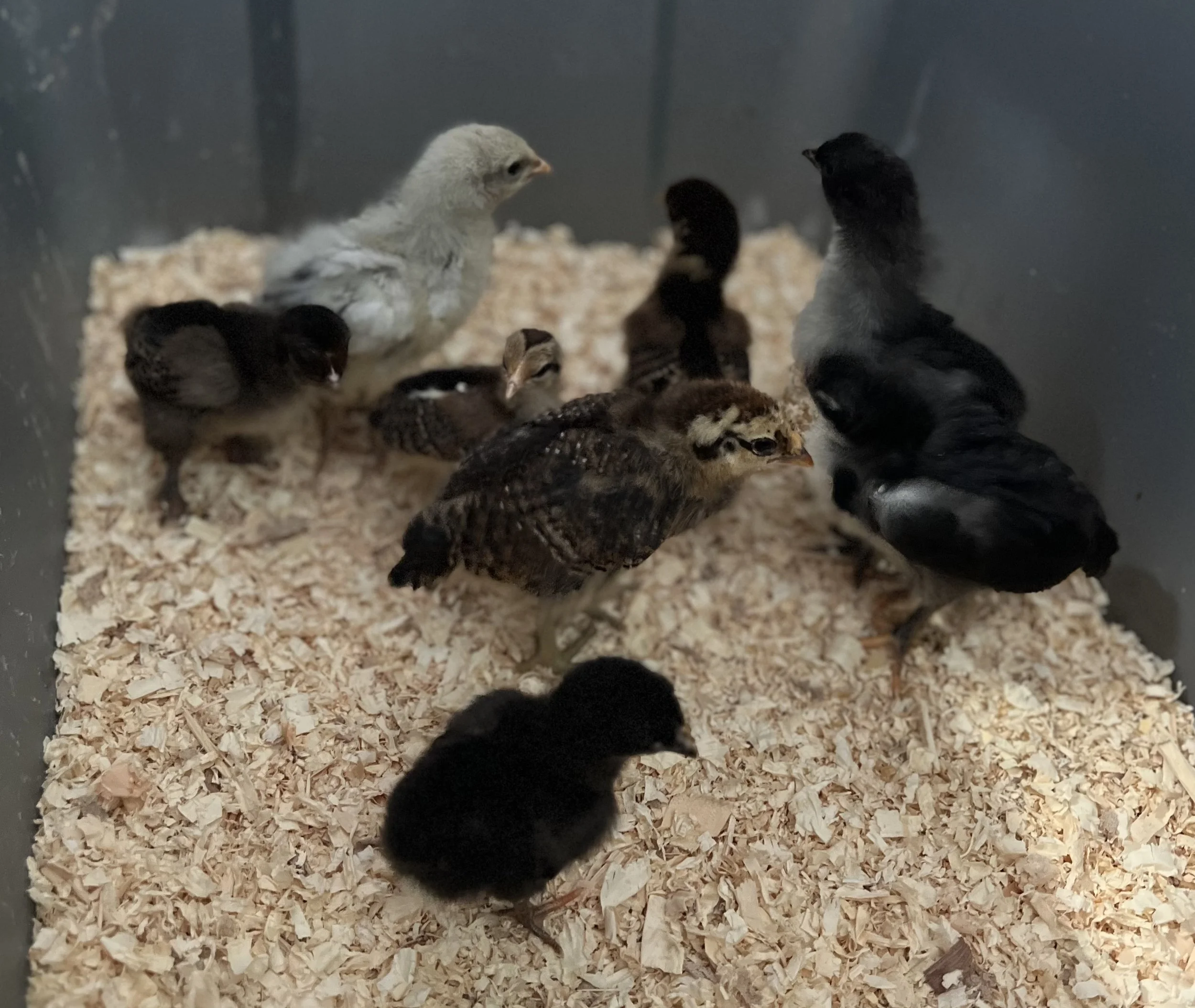
Pine shavings are safe, soft, and affordable
Sand is another good option because it helps keep waterers clean. In fact, I may give this a try next year. With pine shavings, you’ll end up cleaning bedding out of the waterer several times a day because the chicks kick it everywhere.
During the first week, puppy pads are a good option, though they need to be changed often. You can also choose hemp bedding if you like to pamper your animals. It’s low-dust and highly absorbent, but considerably more expensive.
Feed
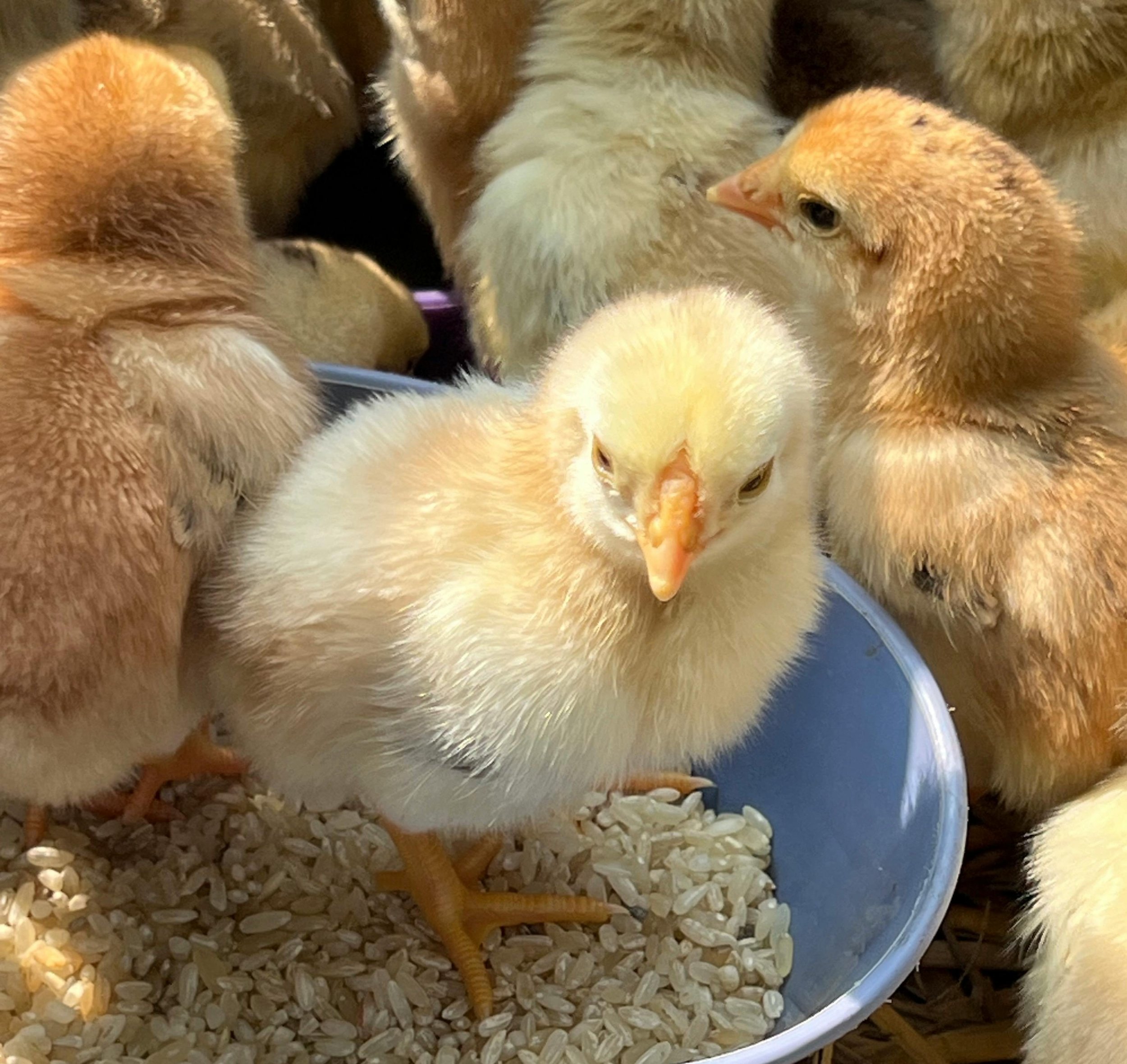
Chicks need extra protein when they are tiny
Make sure you have appropriate containers for food and water. You can usually find these at a local pet store or feed store. I like to use a refilling water bowl, the same kind you might use for a cat. You can use the same or a similar container for feed, though chicks do tend to push and shove. A feeder with openings around the entire perimeter works well.
Keep your waterer filled with clean, fresh water. It will inevitably get dirty and need attention several times a day. Chicks get pretty active after about a week—they climb all over the place and dig around in their litter.
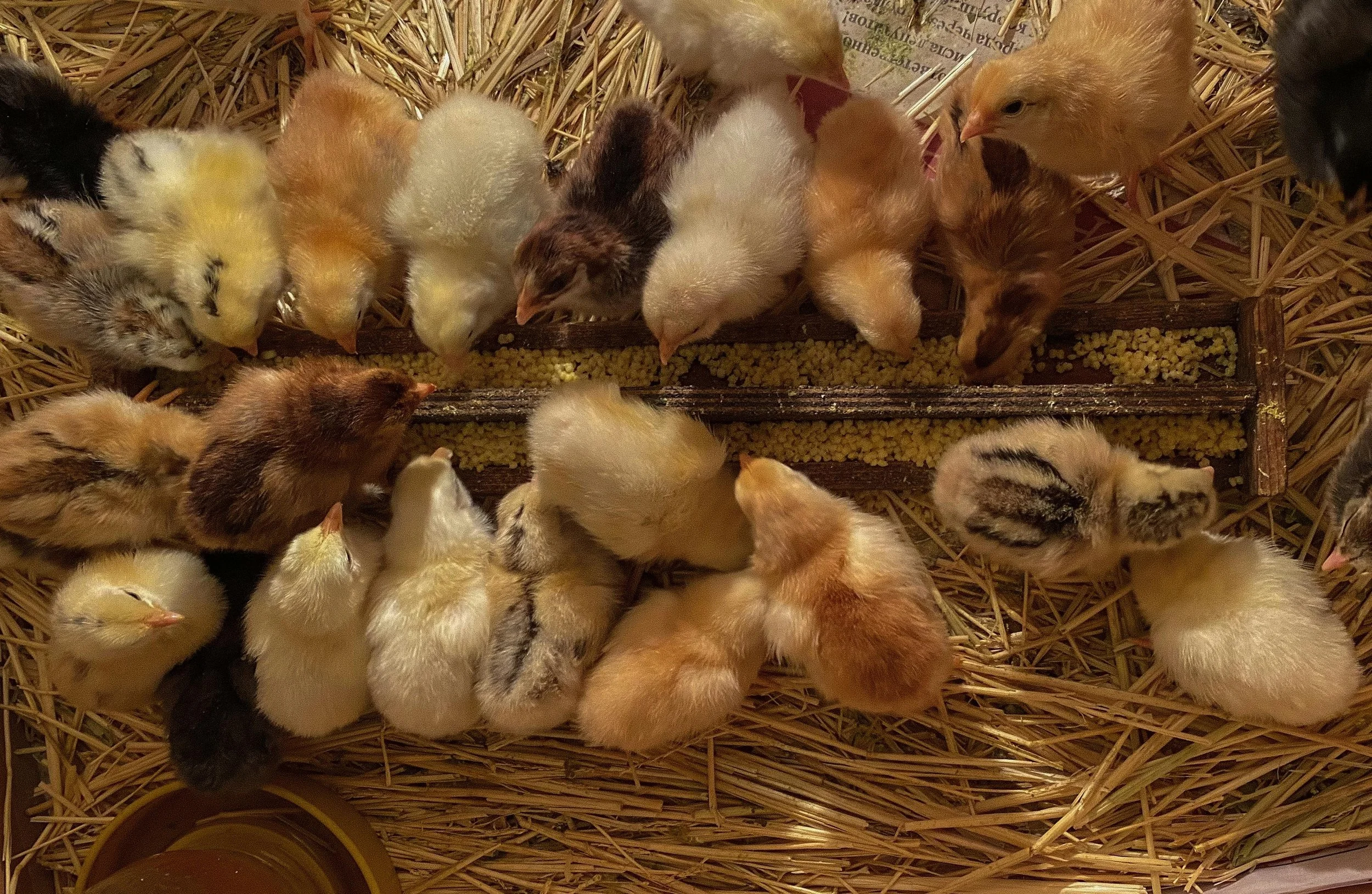
Make sure there is enough to go around, it will help keep the peace
Chick feed is different from adult feed. While there are various options for adult chickens, the choices for babies are more limited. Chicks need a feed that is high in protein and has a balanced calcium level. Feed formulated for laying hens has too much calcium and can be harmful to chicks.
Look for chick crumbles with 18%–22% protein. Smaller crumbles are best for young chicks, as they are easier to eat. You can transition to a lower protein feed (16%–18%) around 6–8 weeks old. At around 16 weeks, you can switch to an adult feed.
Another factor in choosing a starter feed is whether to opt for medicated or unmedicated. If your chicks are vaccinated when you get them, hatchery chicks usually are, and give them unmedicated feed. For chicks that you hatch at home, medicated feed protects against coccidiosis.
Raising Friendly Chickens
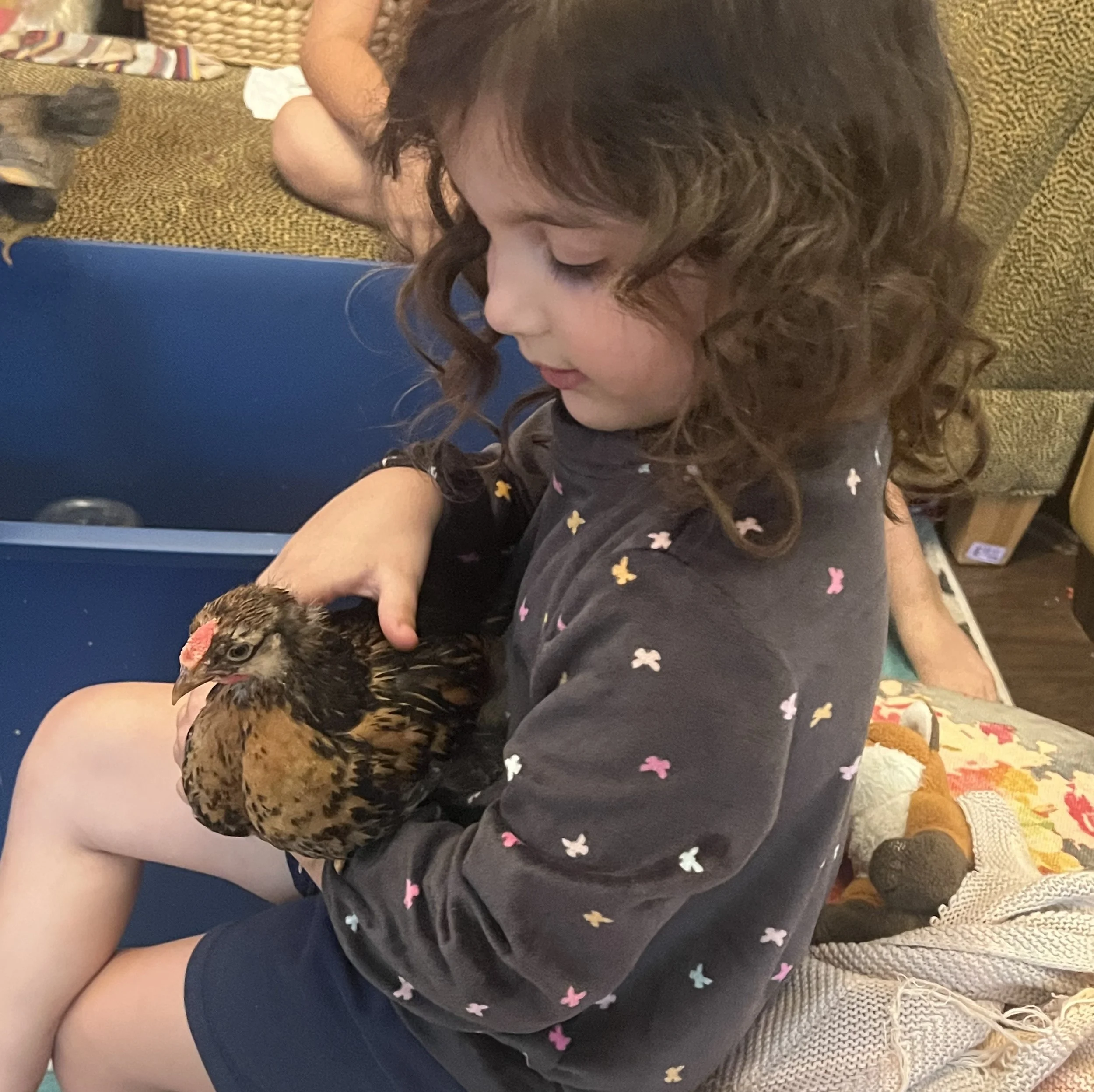
Kids need a little guidance, but they give a lot of love
If you want friendly chickens that come running when you call them, it takes a time commitment. The more you hold and interact with them, the friendlier and easier to catch they will be—this comes in handy if you need to clip flight feathers or administer medication.
I’ve learned that if you tip off the neighborhood parents that you’ll be getting chicks, you can have a steady supply of helping hands. I regularly invite neighborhood kids over during those first weeks.
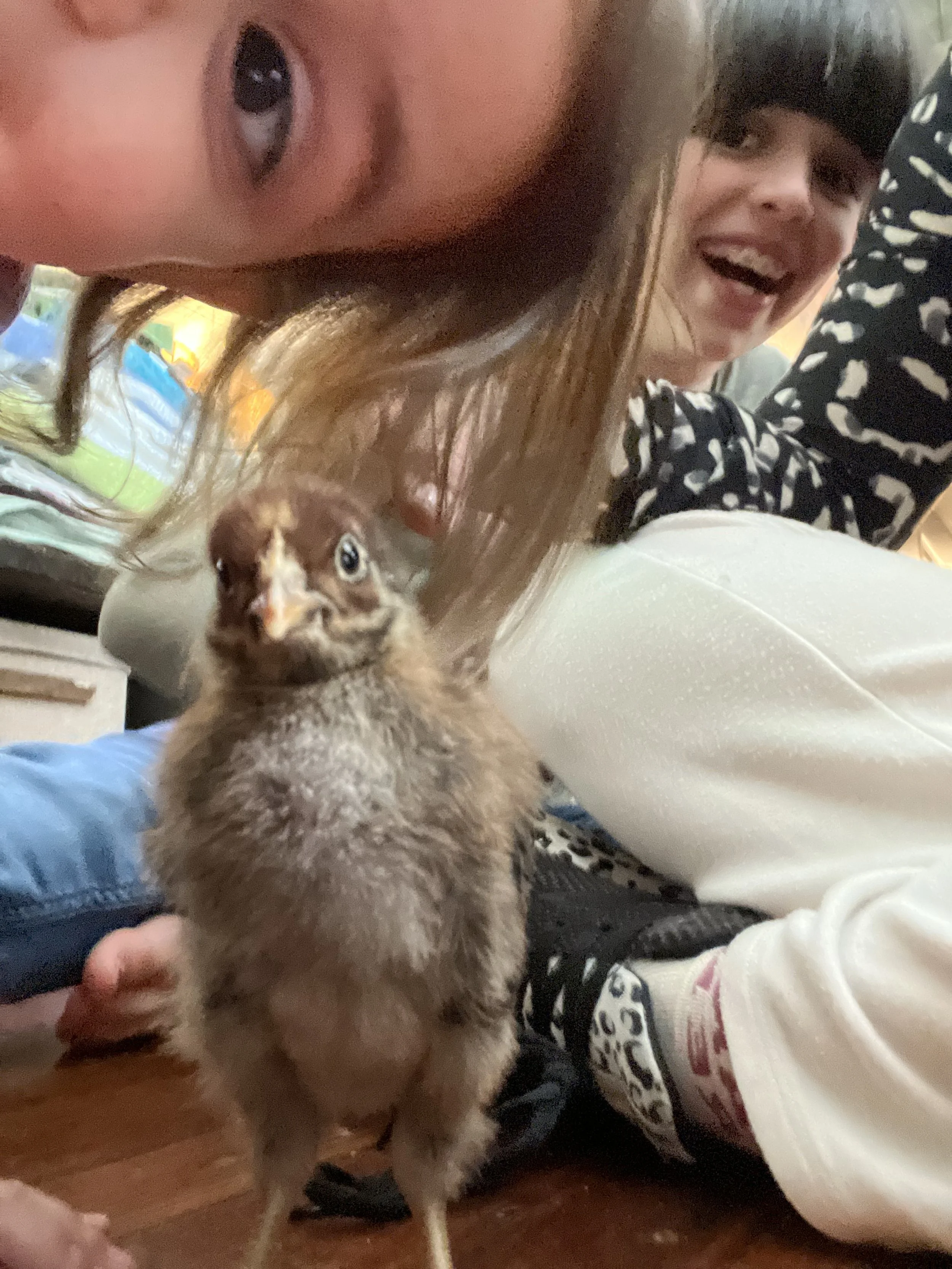
Chickens are naturally curious about cameras, they like selfies!
Lay towels around your space and make sure all handlers are prepared for the inevitable poop. Keep wipes on hand for quick, painless cleanup.
Older kids are typically good about keeping “soft hands,” but don’t make any assumptions. Some children lack the instinct to be gentle and need supervision. Kids under five usually need constant oversight. They want to hold the baby chicks and sometimes squeeze too hard.
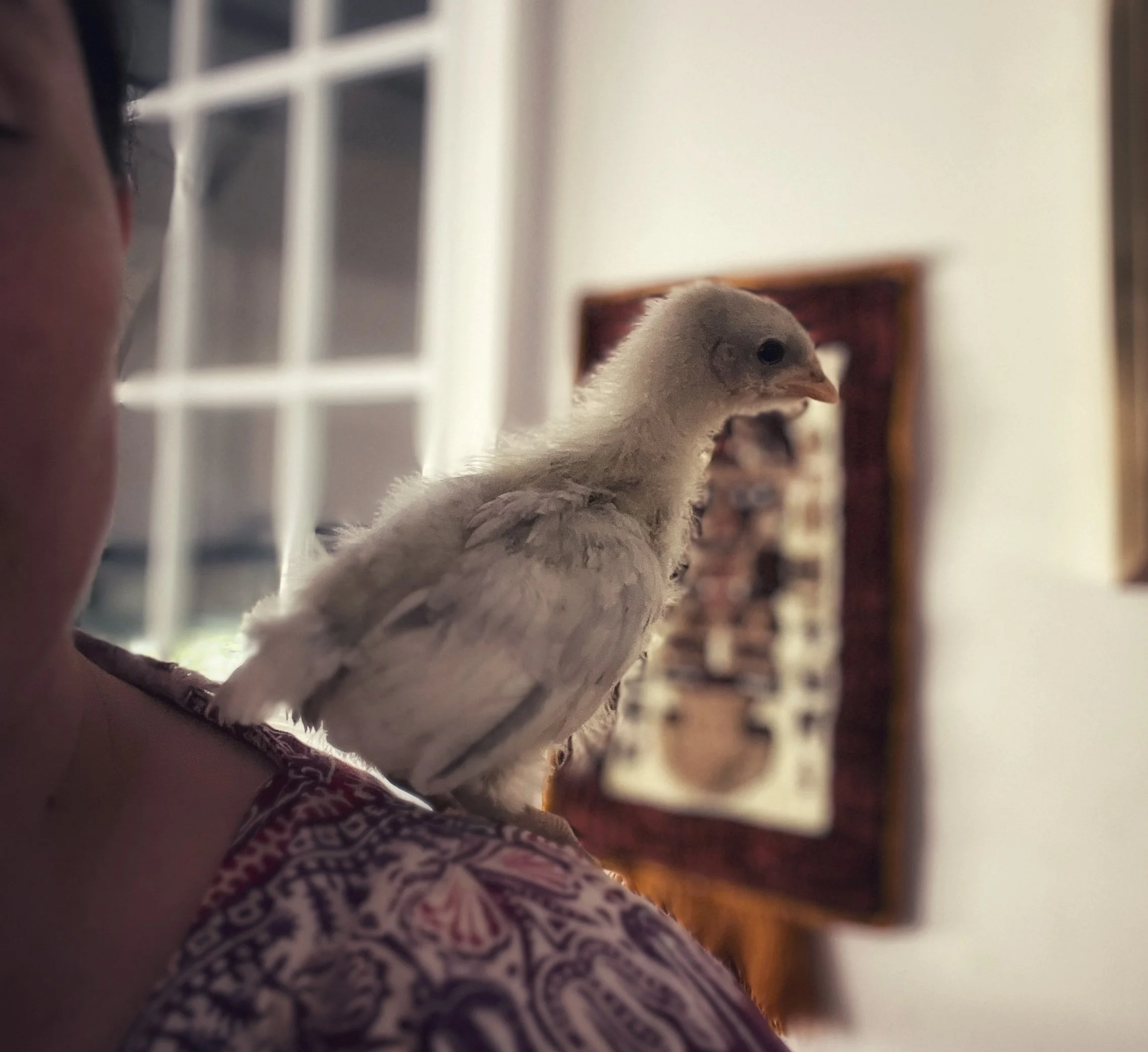
This pretty baby liked to hang out where she could keep an eye on things
The more positive time your birds spend with people, the friendlier they will become. As they get bigger and start recognizing treats, offer little snacks while you play with them. Chickens are very food-motivated. Strawberry tops are usually a first favorite, and small seeds or mealworms are great treats for chicks once they’re feathered out.
Moving Up
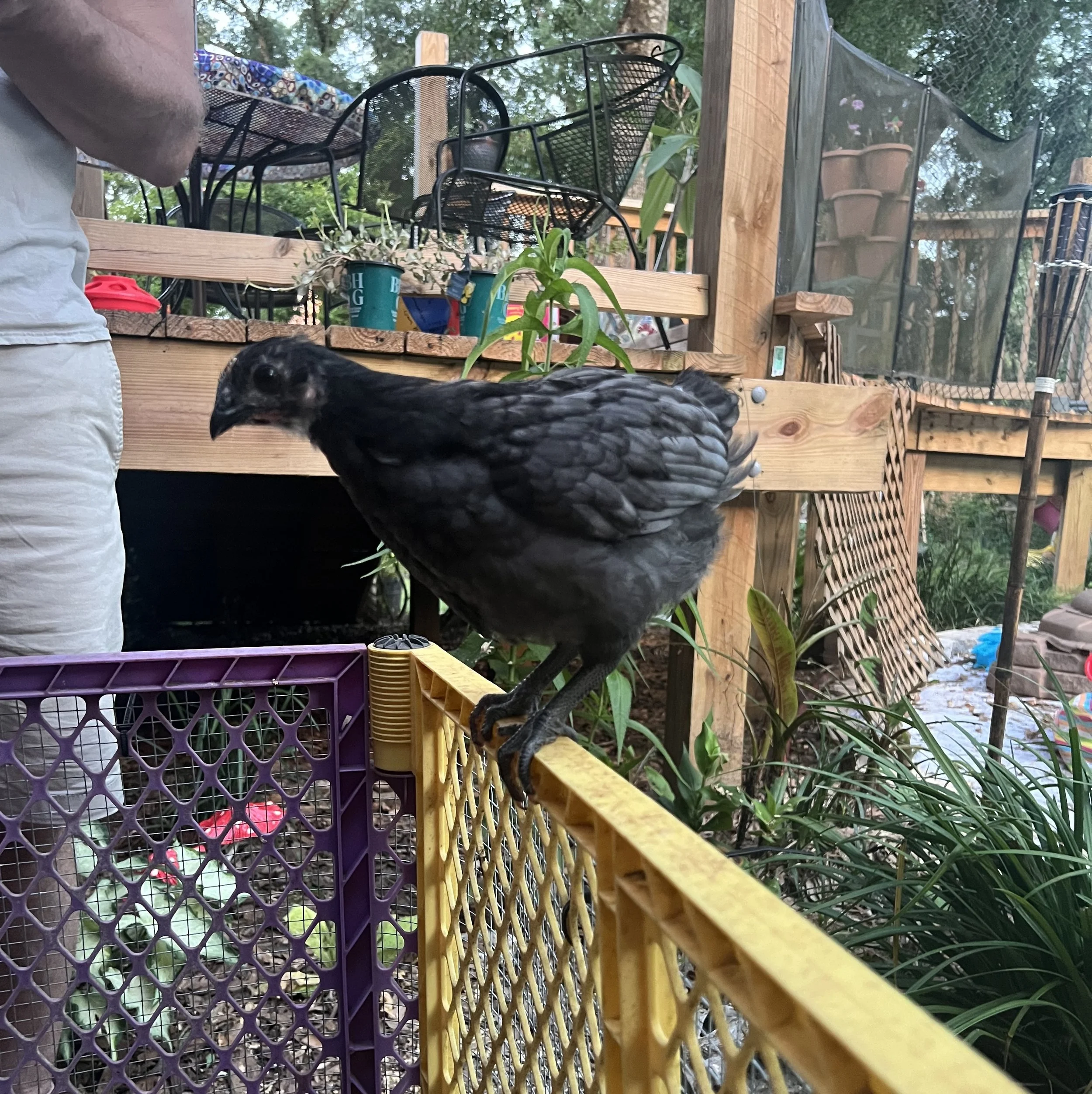
Keep spending time with them through the adolescent stage
At about eight weeks old, your chicks will become higher maintenance indoors. We move ours to their outdoor brooder at this point. We open it up for about an hour a day and spend that time outside with them. If you have a protected space, this is a good time for them to acclimate to the outdoors.
By around 12 weeks old, our chicks are allowed to roam most of the day and return to their outdoor brooder at night. They will stay close to home initially. Don’t worry too much about them running away. They know where the food is, and as flock animals, they stick together most of the time and come home to roost at sundown.
Moving Out
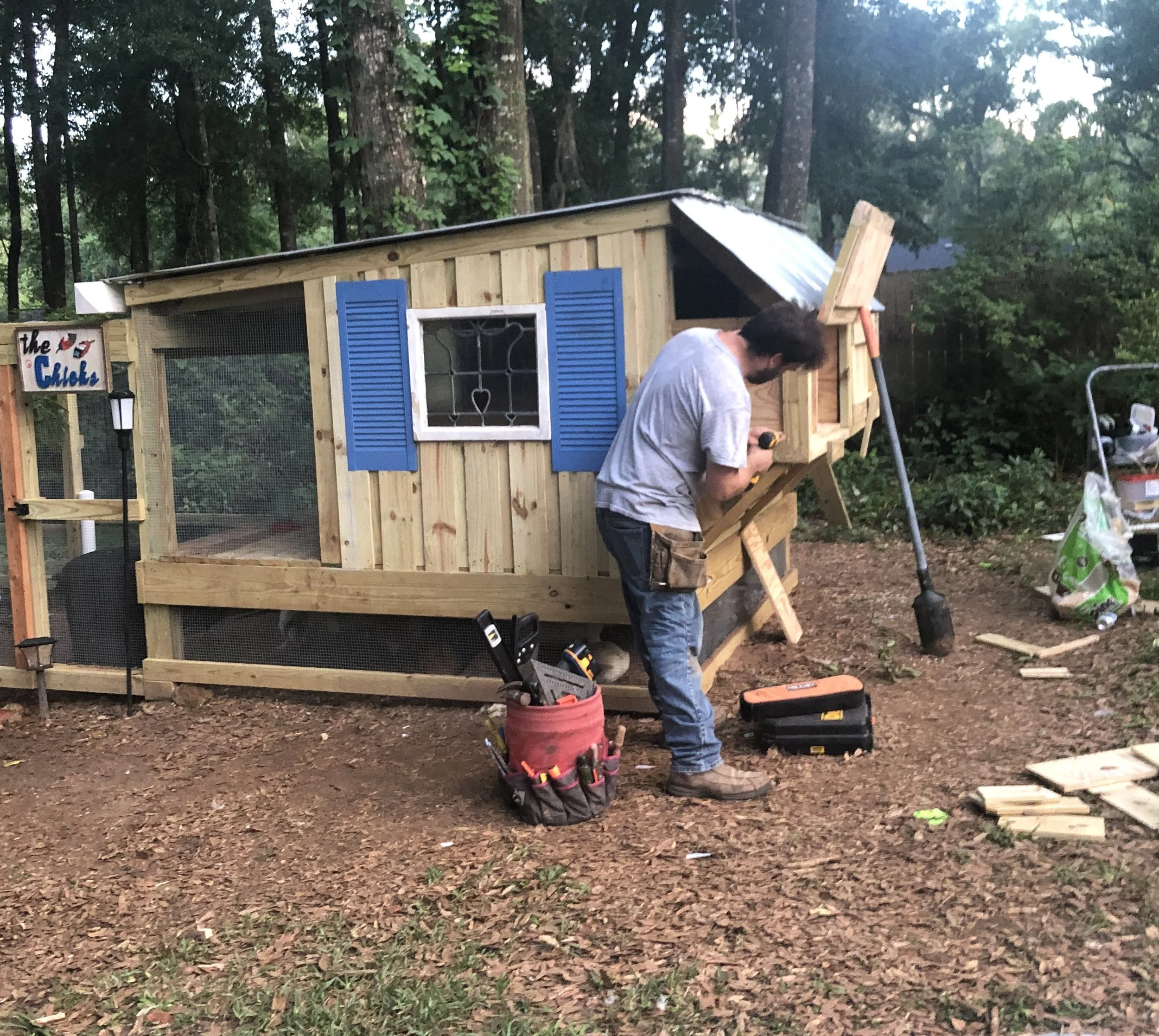
Find yourself a good coop builder!
If these are your first chicks and you’re not introducing them to an established flock, they’ll be fine in their secure adult area and coop by about 12 weeks old. By this time, they are fully feathered and require less attention.
However, in subsequent years, if you add to your flock, you’ll want to hold off a little longer. By now, you’ve likely heard of the “pecking order” and hopefully know how it works. If not, you’ll see it develop among your chicks as early as one week old.
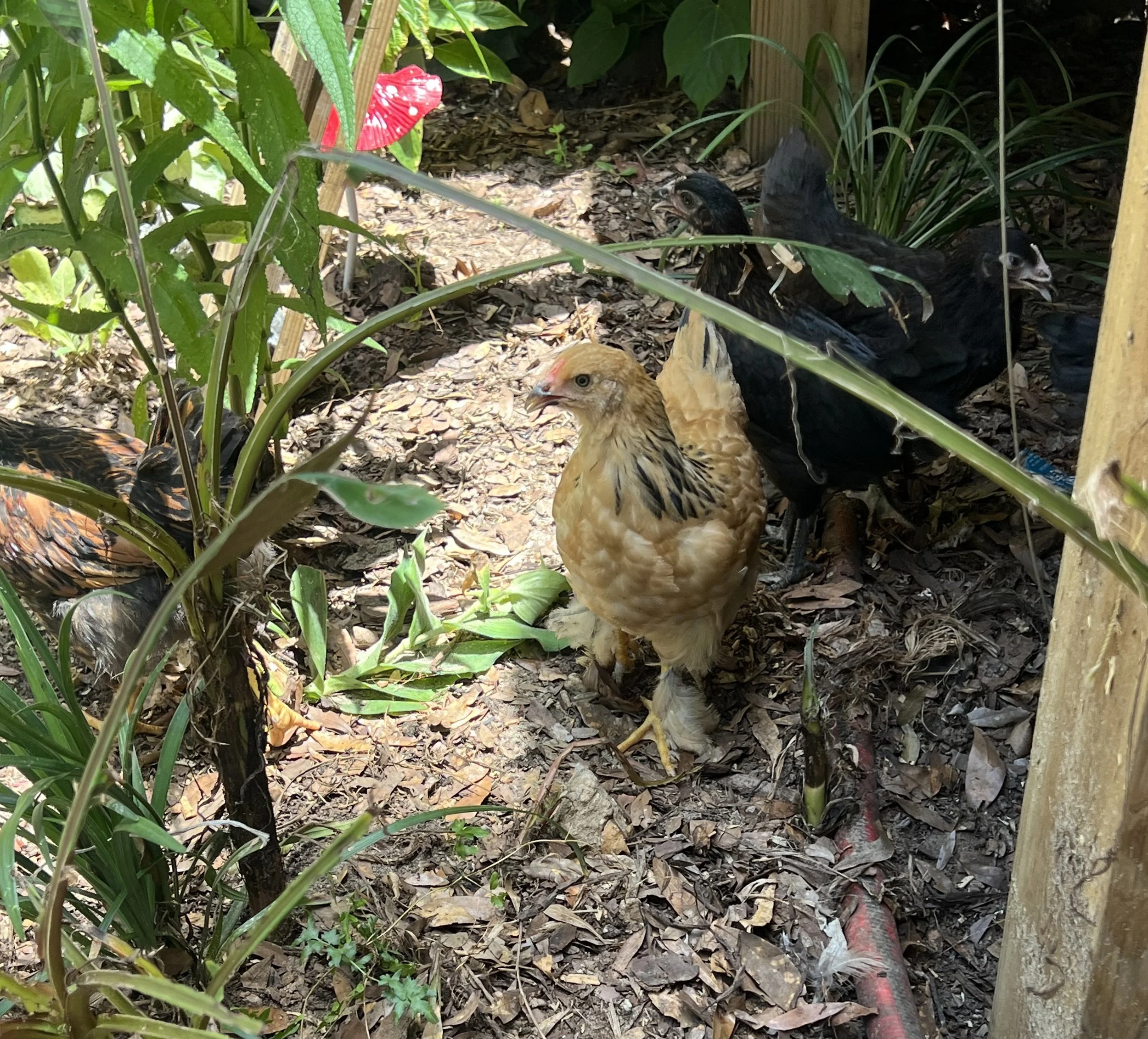
Venturing out, but not too far.
We let our babies free-range in the yard at around 12 weeks old. Our adult flock is fenced into the rear third of our backyard because they are garden destroyers. However, a few smaller, lighter chickens still manage to fly over into the main part of the yard.
The babies meet these rogue flock members inevitably, and most of the time, it’s no big deal. You may have to discourage the occasional bully, but it’s not common. More often, they just go about their foraging.
At around 16 weeks old, the chicks are big enough to handle the adults. I never introduce a single bird to the flock without a friend. The flock will torment them. Always introduce two or more who are already acquainted with each other.
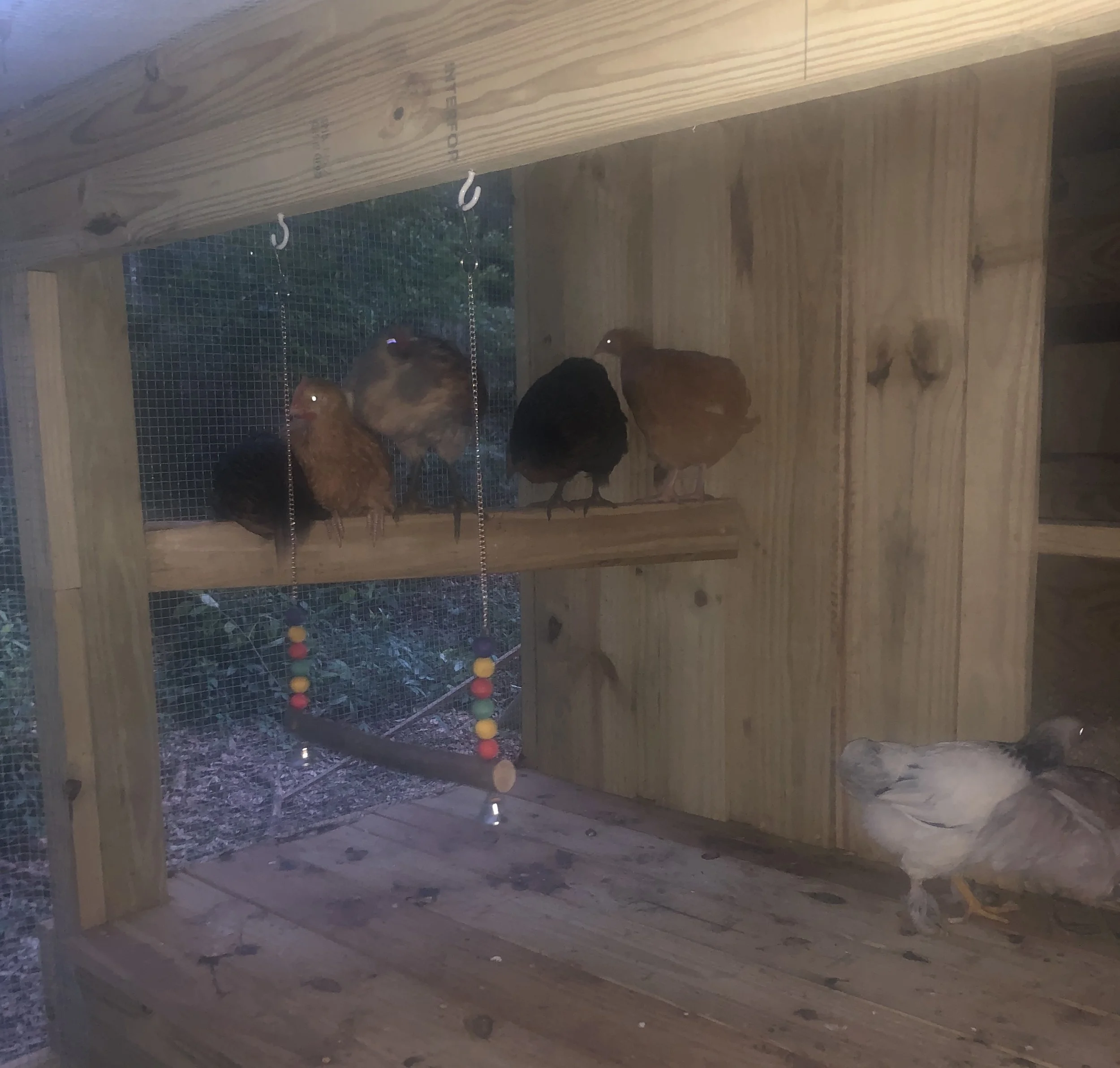
Our girls have always loved their sleeping porch
I wait until they’re about four months old and the flock has already seen them poking around the yard. Then I wait until everyone roosts for the night. I carry the newbies out and pop them in the coop along with the rest of the flock.
The flock is sleepy and may raise a brief clatter, but usually they just shuffle around and go back to sleep. In the morning, the new chicks will see more chickens and won’t think much of it.
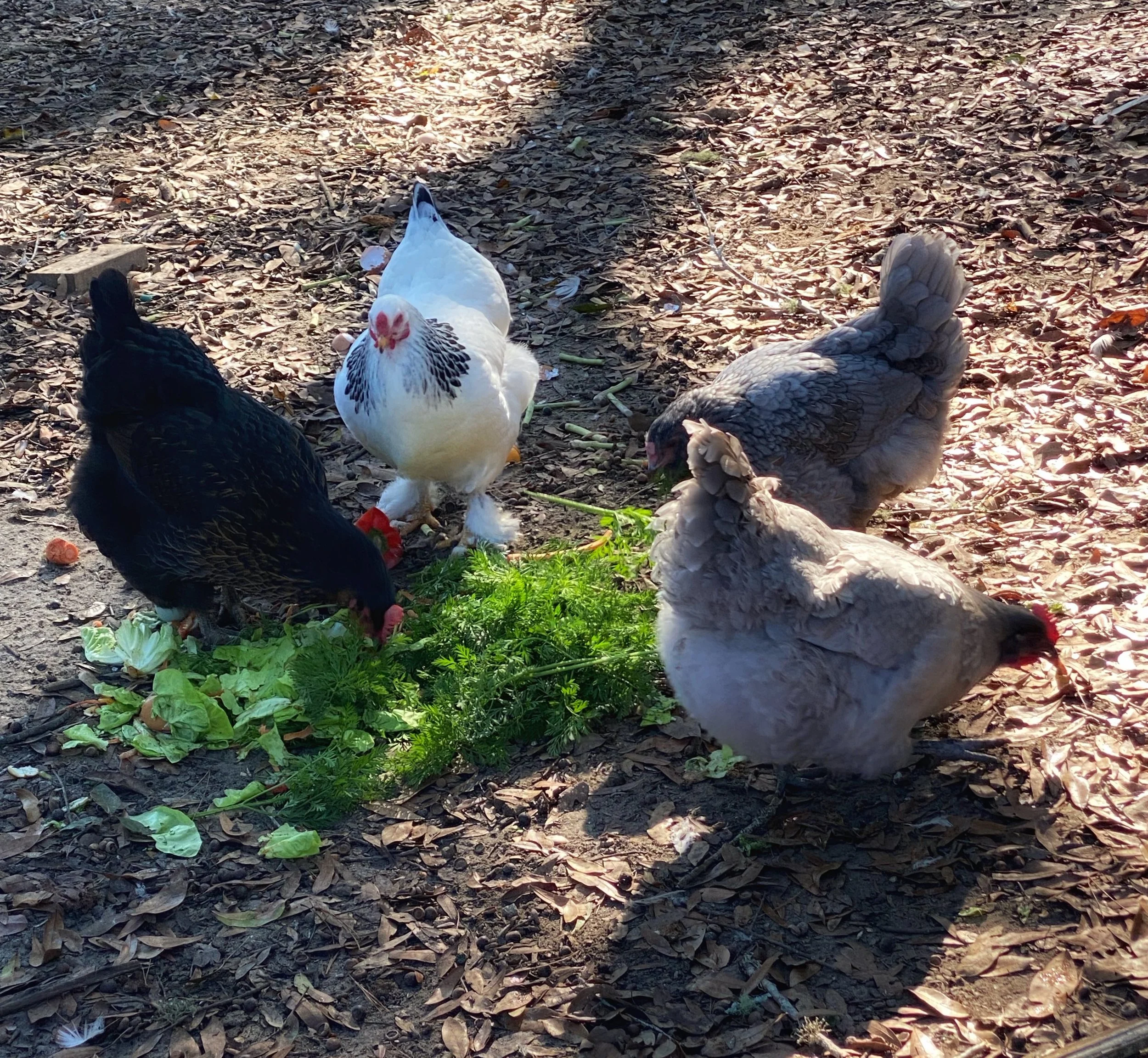
If there is food involved, make sure there is plenty for everyone.
Go out early and give them lots of treats that first day. Make sure there’s enough to go around to discourage bullying. Spread the treats over a larger area so everyone can enjoy them without competing. We’ve yet to experience any serious bullying, and we’ve used this method for six years.
