
11 Houseplants to Turn Your Bathroom Into a Tropical Oasis
Turning your bathroom into a tropical paradise is easier than you might think. As long as you have a sunny window, there are many houseplants that thrive in warm, humid environments. Here are some of my favorite, moisture-loving plants to make your bathroom feel like a permanent vacation.
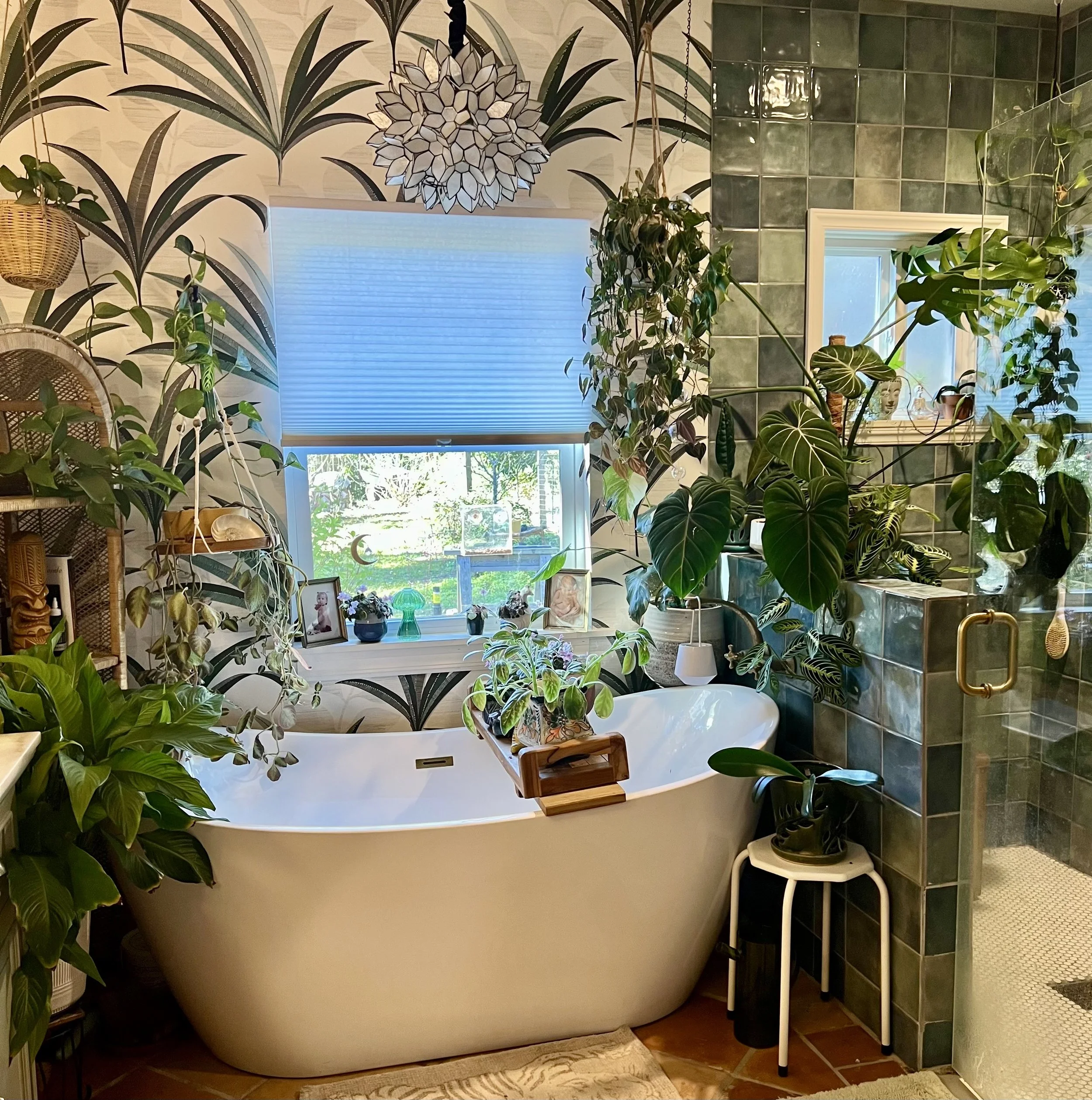
My favorite room in the house!
When we purchased our home, it had many wonderful qualities. A great spot for houseplants, sadly, was not one of them. So, when we welcomed our third child and decided to build on rather than move, I seized the opportunity. I worked with a local architect to design the bathroom around a pair of southwest-facing windows, creating the perfect place to expand my houseplant collection, without the harsh glow of artificial grow lights.
Fast-forward five years, and I've created a tiny, layered jungle. Stepping into the shower now feels like a stroll through the tropical rainforest, surrounded by lush greenery. If you’re dreaming of creating a similar bathroom oasis, I’d love to share some plants that grow well in this environment.
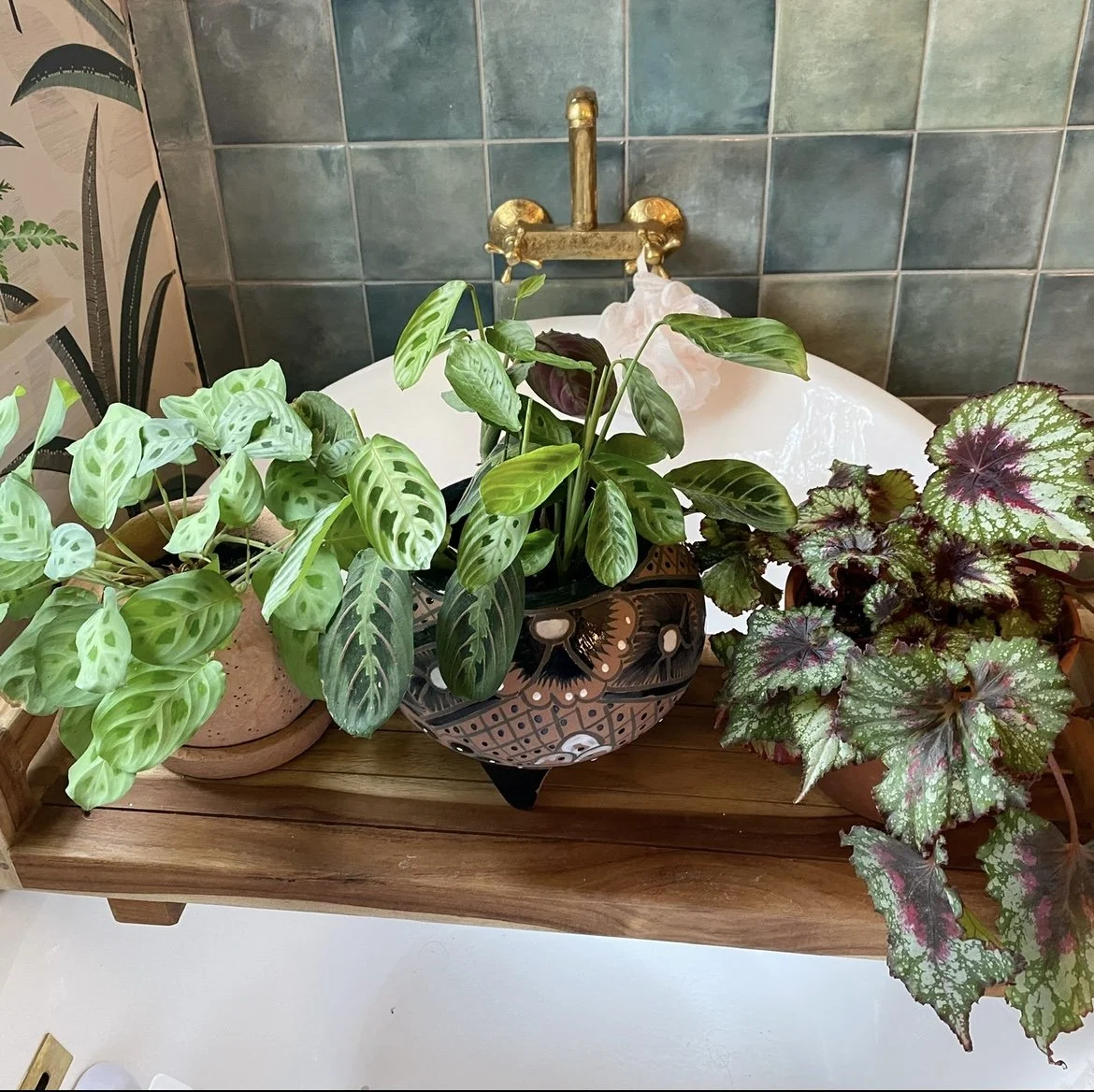
Maranta leuconeura, Begonia rex-cultorum
The key to choosing houseplants that will thrive in your bathroom is humidity. Some plants love it, some hate it, and most fall somewhere in the middle. The bathroom is a humid room, so it needs plants that like ambient moisture. One of the best ways to predict what a plant needs is by looking at its native habitat.
Many of our favorite houseplants come from tropical regions. They’re naturally adapted to warm, humid conditions and can tolerate a range of light levels. Let’s take a look at some beautiful plants that will feel right at home in your bathroom.
Phalaenopsis Orchid
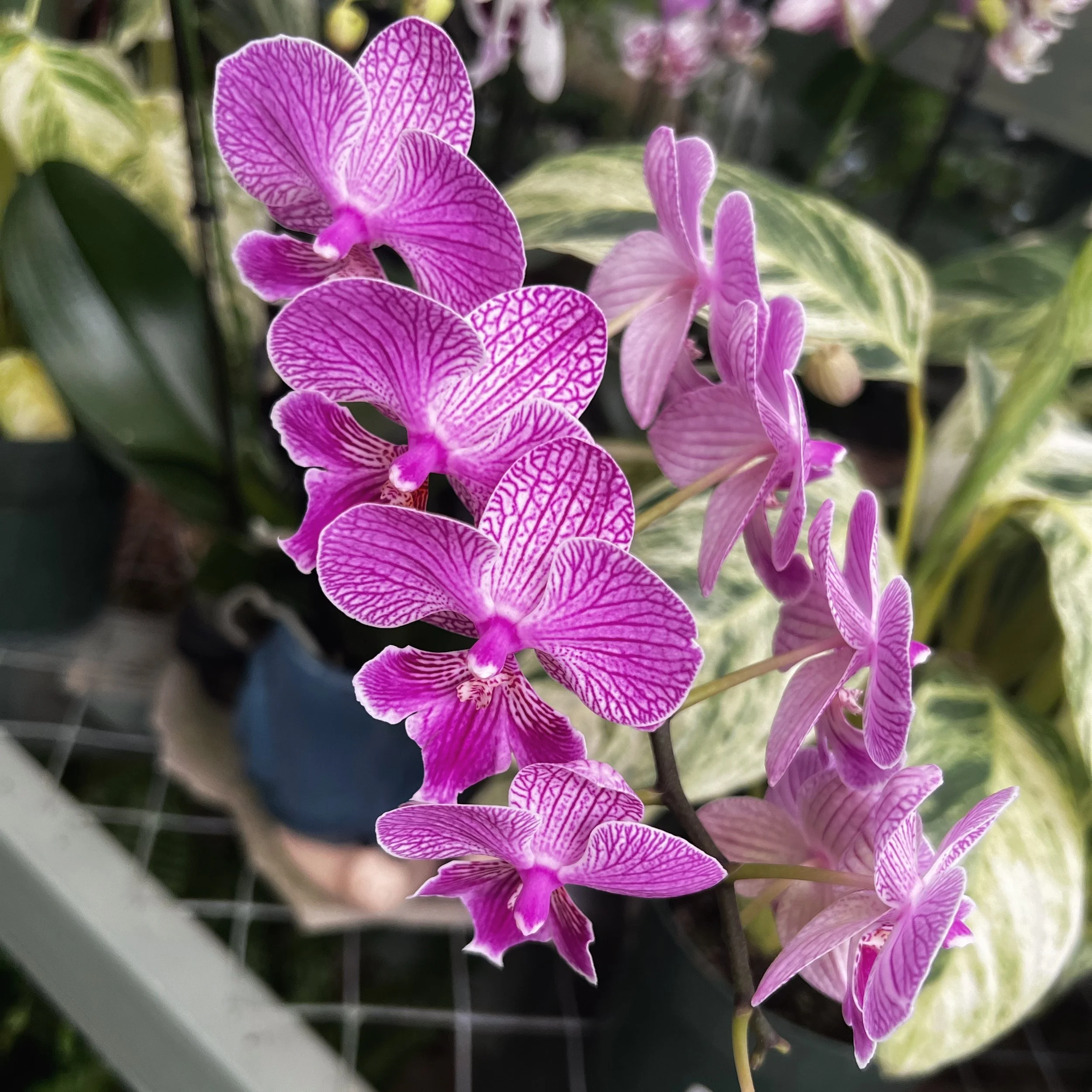
White phalaenopsis orchid hybrid with purple markings
Orchids, in general, are happiest in humid environments. The majority of orchids sold in stores are tropical epiphytes. They grow in tropical rainforests, wrapping their roots around tree branches. They get sunlight filtered through the canopy overhead. Orchids like a wide range of light conditions, depending on how high up in the canopy they grow. Some tolerate nearly full sun, while others prefer indirect, moderate, or filtered light.
Phalaenopsis orchids make excellent houseplants, and they thrive in humid environments. I have two in my bathroom, and they are happy and healthy. The smaller one sits directly behind privacy glass in a window. This filters and disperses the sunlight so that it doesn't burn the leaves.
Phalaenopsis orchids prefer bright, indirect light. However, considering all orchids, these are among the most tolerant of low-light conditions. You'll know that your orchid isn't getting enough light if it produces a lot of green growth, but no flowers for an entire year. Keep these out of direct sunlight, it will burn their waxy leaves. White patches on the top of leaves indicate sun scorch.
Tillandsia
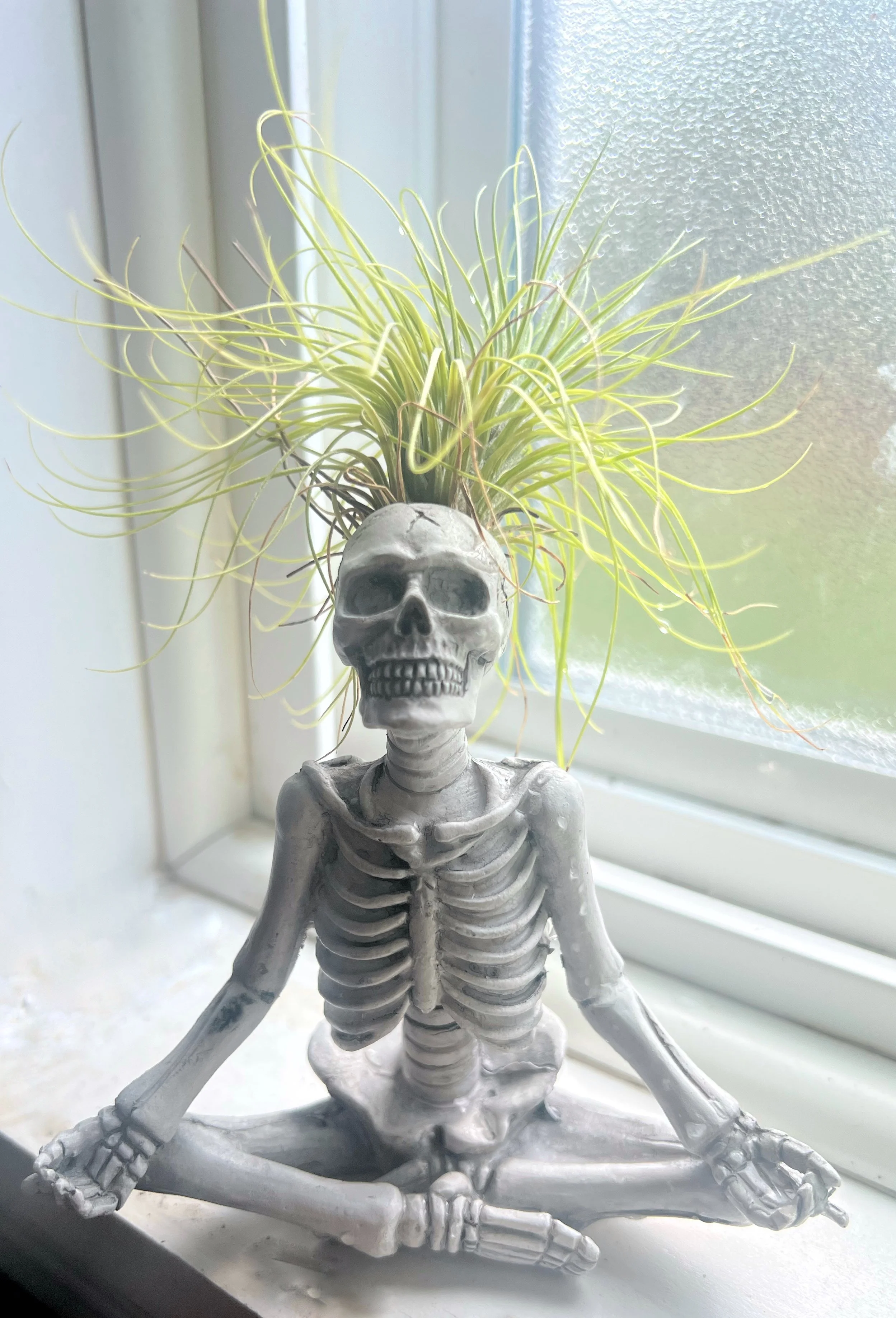
One of my favorite planters
Similar to orchids, tillandsias are mainly tropical epiphytes. They're also known as air plants, and are in the Bromeliaceae family. Their roots act as anchors, holding them in place on trees and rocks. They aren't useful for absorbing water or nutrients. Tillandsia rely on moisture in the air to survive.
Give your tillandsia plant bright, indirect, or filtered light. Mine sits next to a Phalaenopsis orchid, and it blooms for me yearly. These produce brightly colored flowers from the center of a rosette of fine leaves. It's a delightful little plant that needs almost no care. I rinse it with water now and then when I take a shower. Otherwise, it practically takes care of itself.
Maranta
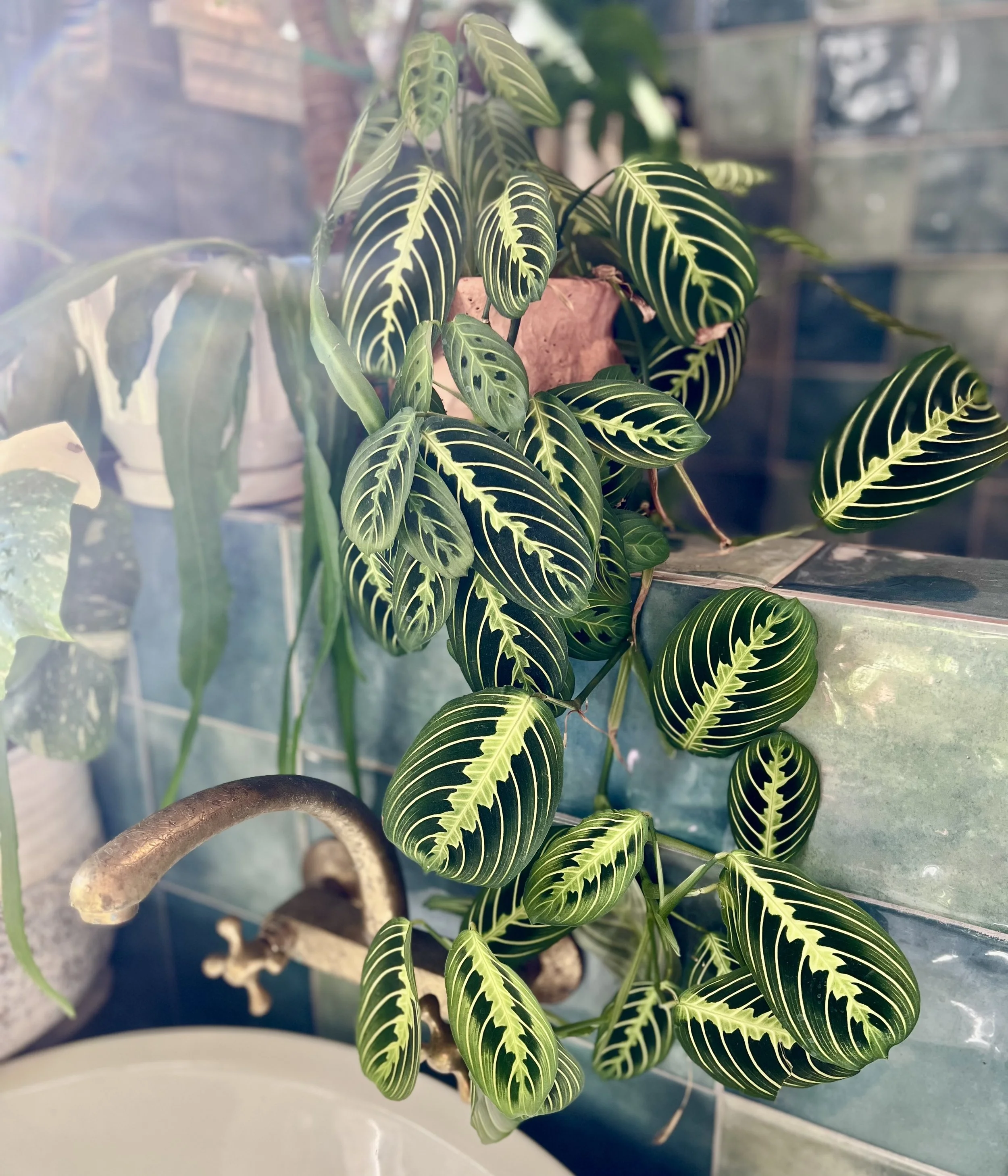
Maranta leuconeura ‘Lemon Lime’
This is one of my current favorites, as it has truly flourished in this space and has such intricate and beautiful foliage. Marantas are part of the group commonly referred to as prayer plants. This nickname comes from their habit of raising their leaves at night, like hands in prayer. In the morning light, the leaves return to their original position to absorb the sunlight.
These houseplants prefer bright, indirect light. As rainforest understory plants, they are accustomed to sunlight filtered through the canopy above. Marantas are highly sensitive to humidity levels and chemicals. They are happiest when you give them filtered water. Rainwater is best, but collecting that for houseplants can be arduous. They love humidity, so the bathroom is the perfect place for your maranta.
If you notice brown tips on your maranta’s leaves, it’s usually one of two issues. Either you’re watering with tap water that contains too much chlorine or fluoride, or the air is too dry.
Philodendron Micans
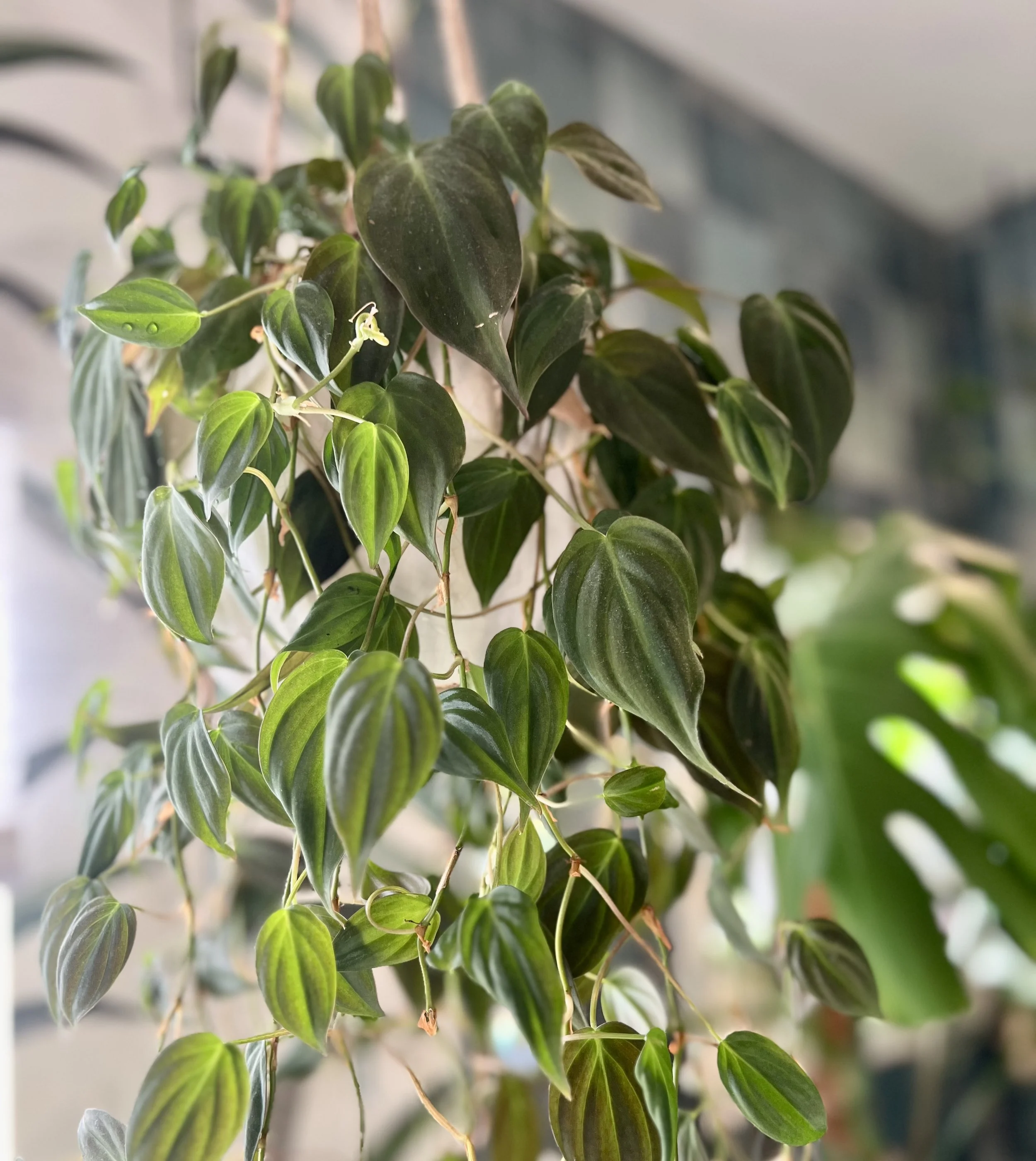
Philodendron hederaceum var. hederaceum
Philodendron micans, also known as the velvet-leaf philodendron, is a popular and beautiful houseplant native to Central and South America. As an understory plant, it can either climb or trail, depending on the light. Mine trails because it sits slightly above the light source, growing naturally toward it.
Known for its beautiful, heart-shaped leaves, Philodendron micans features foliage with a soft, velvety sheen. The leaves have an iridescent quality and often have a subtle reddish tint to the underside. This effect is most dramatic when it's backlit. Avoid direct sunlight; bright, indirect light is ideal. Overall, this is an easy-going and eye-catching houseplant that will thrive in a bathroom environment.
Philodendron Gloriosum
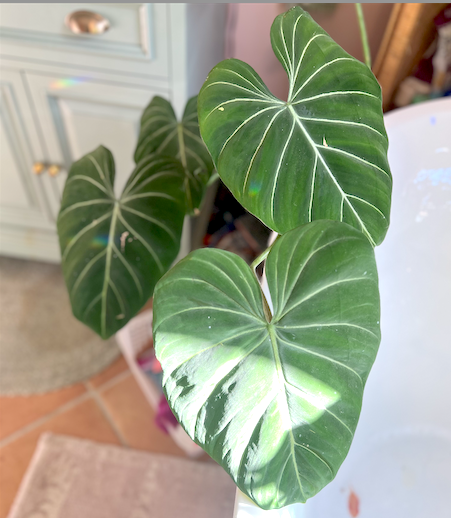
Philodendron gloriosum ‘Dark Form’
If you want a truly spectacular foliage plant that is also resilient and sturdy, look no further. Philodendron gloriosum is one of the most tolerant and beautiful plants in my collection. Primarily native to dense rainforests in Colombia, this philodendron is a terrestrial species that crawls along the forest floor rather than climbing. As a result, it is tolerant of, and prefers, higher humidity and soil that is rich in organic material.
It is a fast grower with stunning foliage. The leaves are large and velvety with a similar sheen to Philodendron micans. These come in several distinct forms. I grow the Dark Form variety, which features deep-green leaves accented with bright white veining. Philodendron gloriosum thrives in bright, indirect light and appreciates regular moisture, though I find that my philodendrons prefer their soil to dry slightly between waterings.
African Violet
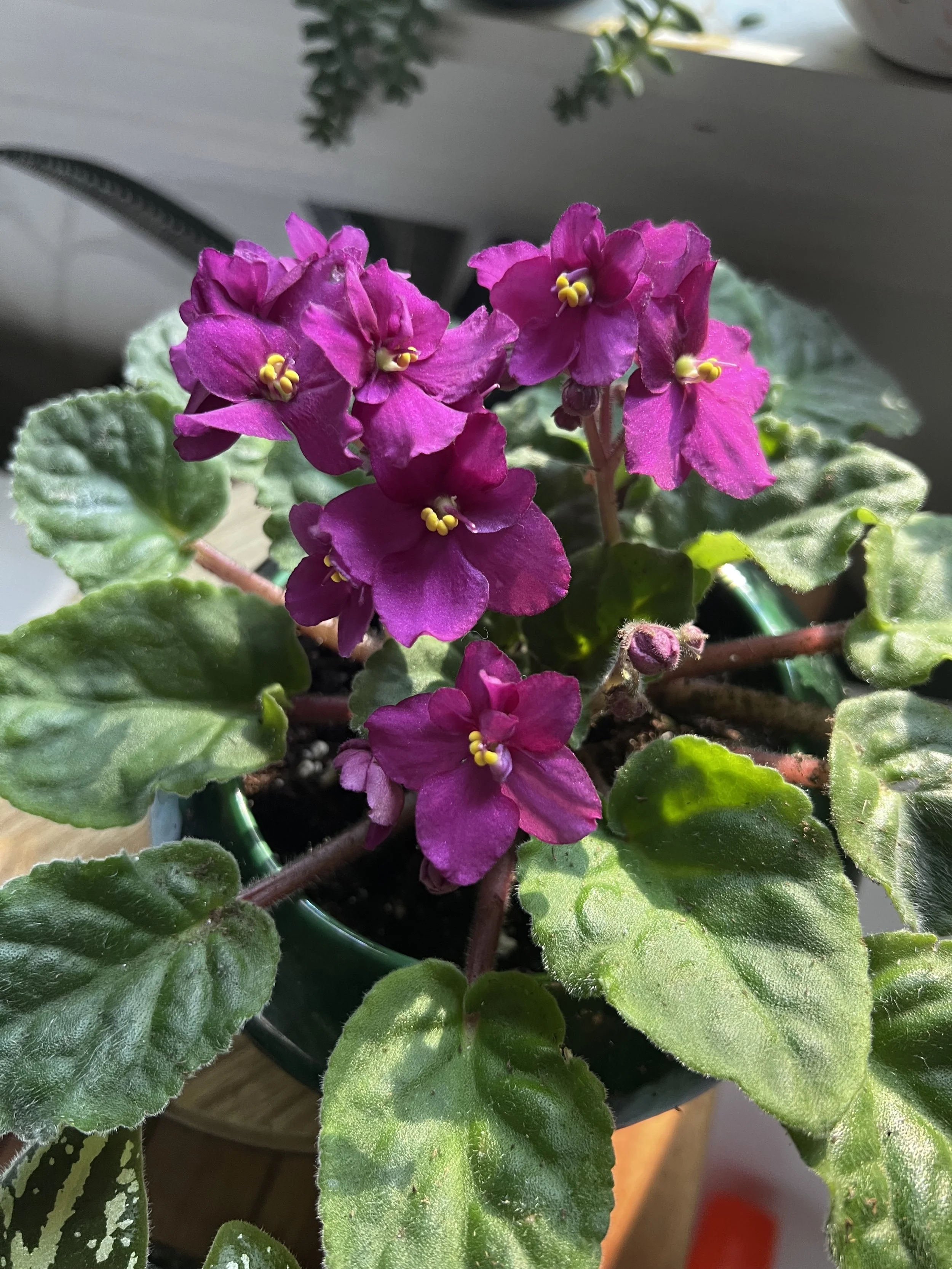
African Violet Streptocarpus sect. Saintpaulia
African violets perform surprisingly well in a well-lit bathroom window. Mine bloom consistently in this spot, and I find that I need to divide them at least once a year. These houseplants are tropical rainforest natives from Tanzania and Kenya and belong to the Gesneriaceae family. Their soft, velvety foliage and bright, cheerful flowers make them both popular and easy to find.
With the right amount of light, African violets can bloom nearly year-round. I keep mine directly in the southwest facing window, where they receive a bit of direct sun; though too much can fade the leaves. Keep the soil evenly moist but never soggy, as excess water can lead to root rot. Using a fertilizer formulated specifically for African violets will help encourage consistent blooming.
Bird’s Nest Anthurium
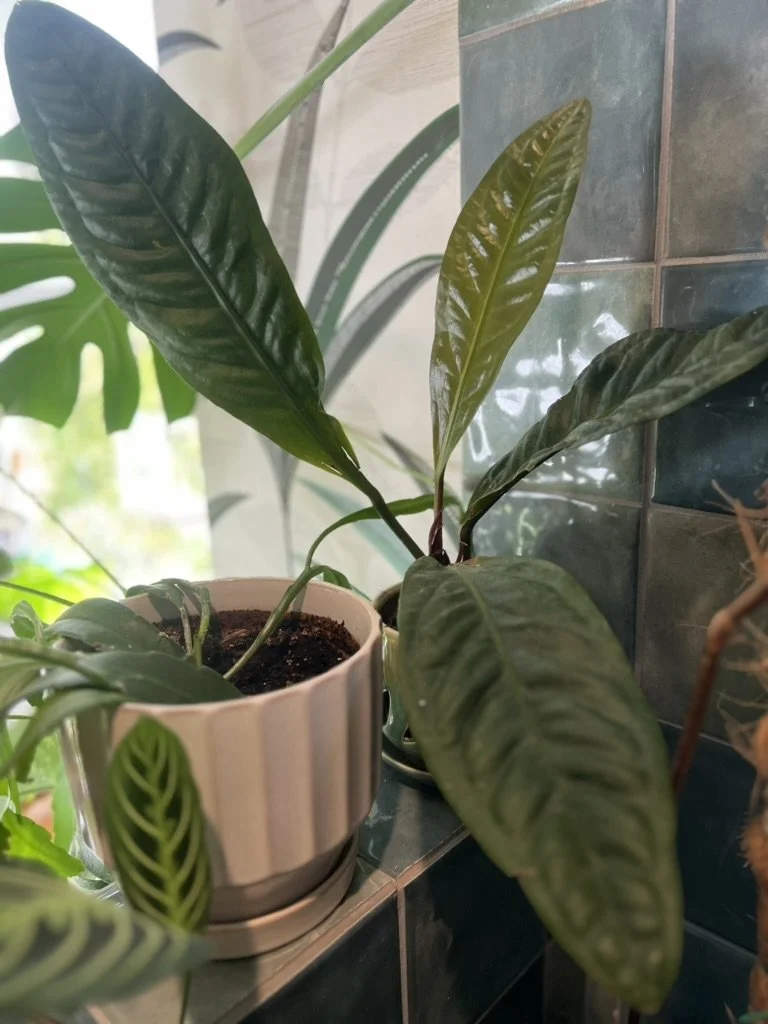
Anthurium superbum
Anthuriums can be tricky to care for if you’re unsure how to meet their needs. Like most plants, understanding where they grow naturally makes their care much easier. The bird’s-nest anthurium is native to the humid tropical rainforests of western South America. It is an epiphyte, similar to orchids and air plants.
Because of its epiphytic nature, regular potting soil often leads to root rot. In the wild, the roots are exposed to air rather than buried in dense soil, so a loose, well-draining potting mix is essential. It’s difficult to tell from the photo above, but I grow this plant in an orchid pot with holes along the sides to improve airflow and root aeration.
Water your anthurium much like you would an orchid, Soak the pot in water, allow it to drain completely, then allow the potting medium to dry between waterings. These plants also appreciate high humidity and bright, indirect light. Mine lives directly in the shower, where it receives indirect light from two directions. It also tolerates lower light conditions better than many other houseplants.
Michaelmoelleria Vietnamensis
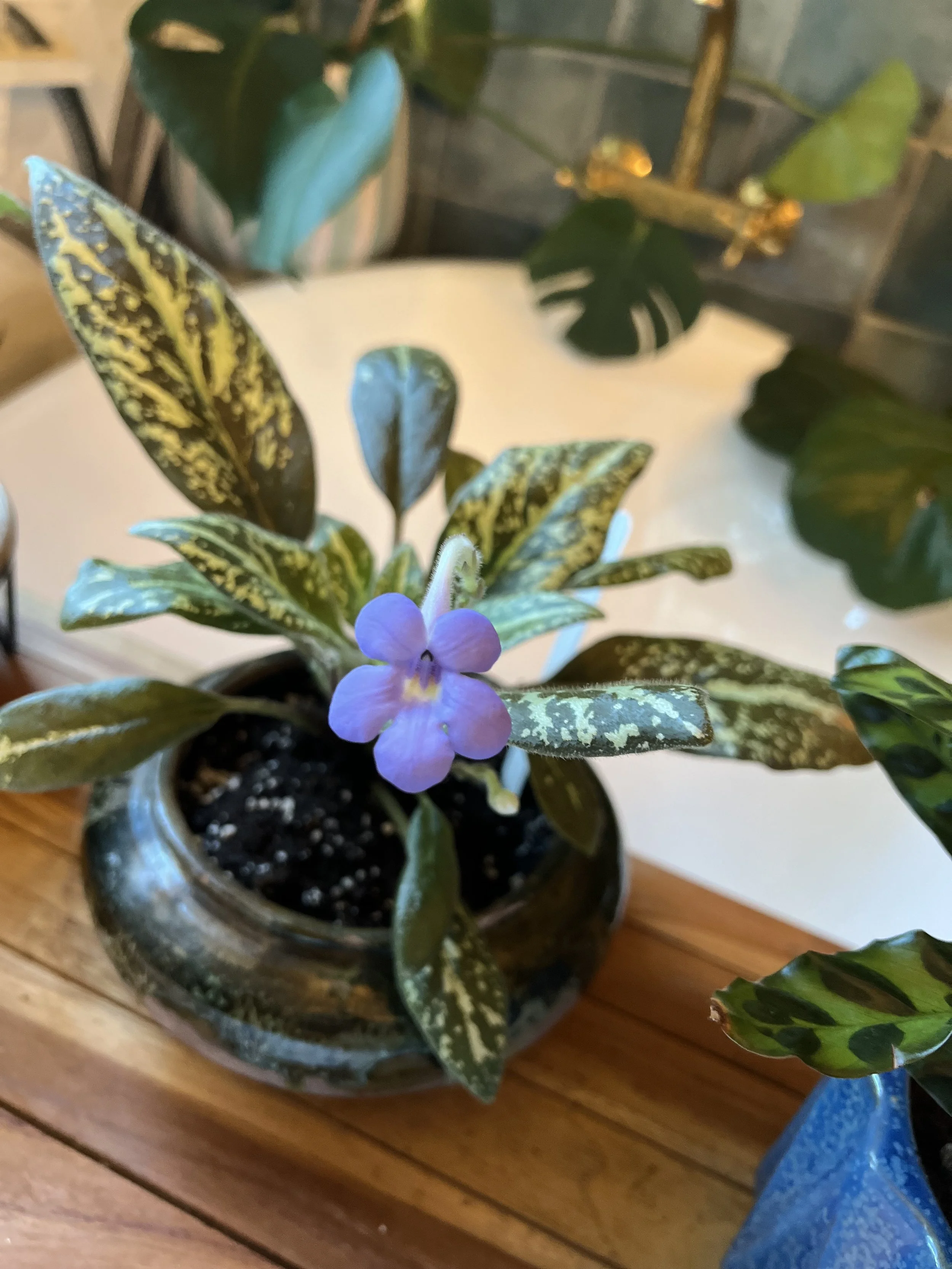
Michaelmolleria vietnamensis
This next one is a truly special and rare plant, but it’s relatively accessible and worth the search to have one. Michaelmolleria vietnamensis is a single-species genus, meaning it has no close relatives. It belongs to the same family as African violets and shares similar care requirements. Its native range is southern Vietnam, where it grows in the forest understory.
Although critically endangered in the wild, Michaelmolleria vietnamensis is becoming more common in cultivation. While it can still be difficult to locate, it is not impossible to find. I purchased mine from a local specialty houseplant store, NorthFlora Collective about four years ago. This pretty plant is lovely, with soft, fuzzy leaves accented by silver variegation. Delicate violet flowers rise above the foliage on long, graceful stems.
Michaelmolleria vietnamensis prefers bright, indirect light and consistently moist soil. Care for it as you would an African violet, and it will thrive as a houseplant. It is happy in higher humidity, so it grows nicely in the bathroom.
Philodendron ‘Imperial Red’
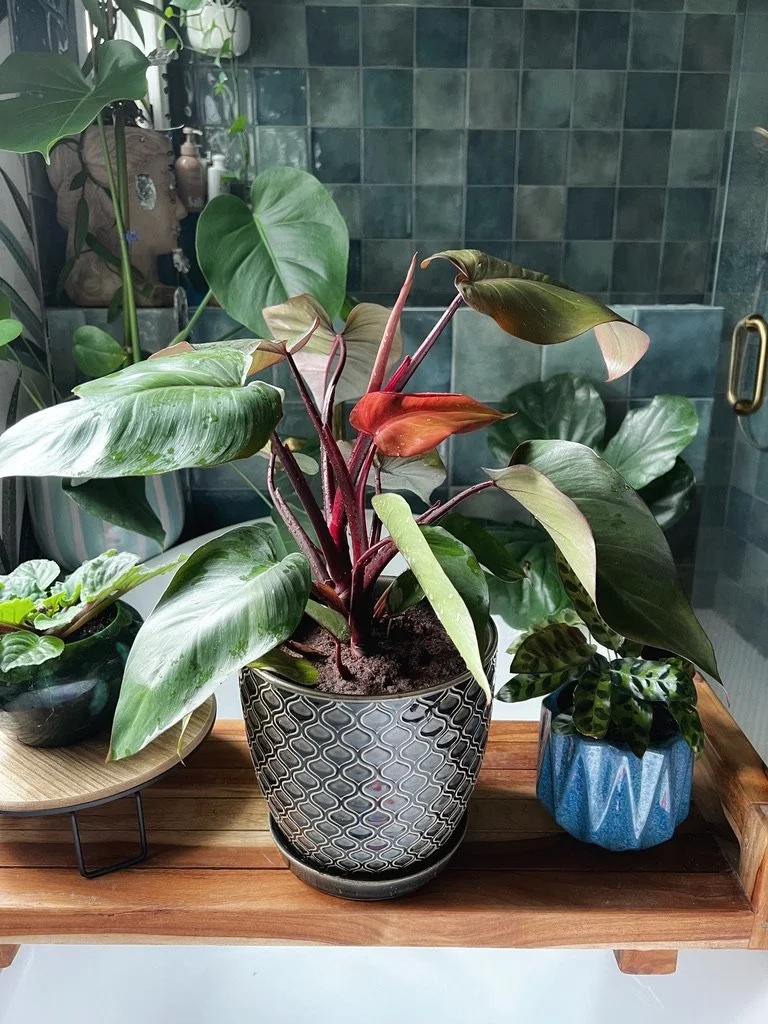
Philodendron erubescens ‘Imperial Red’
I want to include one more philodendron here, because they truly make excellent bathroom houseplants. ‘Imperial Red’ is a stunning hybrid, with parent species native to Central and South America. As a rainforest understory plant, it thrives in bright, indirect light and high humidity.
This philodendron is self-heading rather than climbing and typically reaches two to three feet in height. Its large, glossy leaves emerge red and gradually deepen to a rich, dark green as they mature. With its full, bushy growth habit and easygoing nature, it requires care similar to other philodendrons. It makes an especially attractive addition to indoor spaces.
Monstera Deliciosa
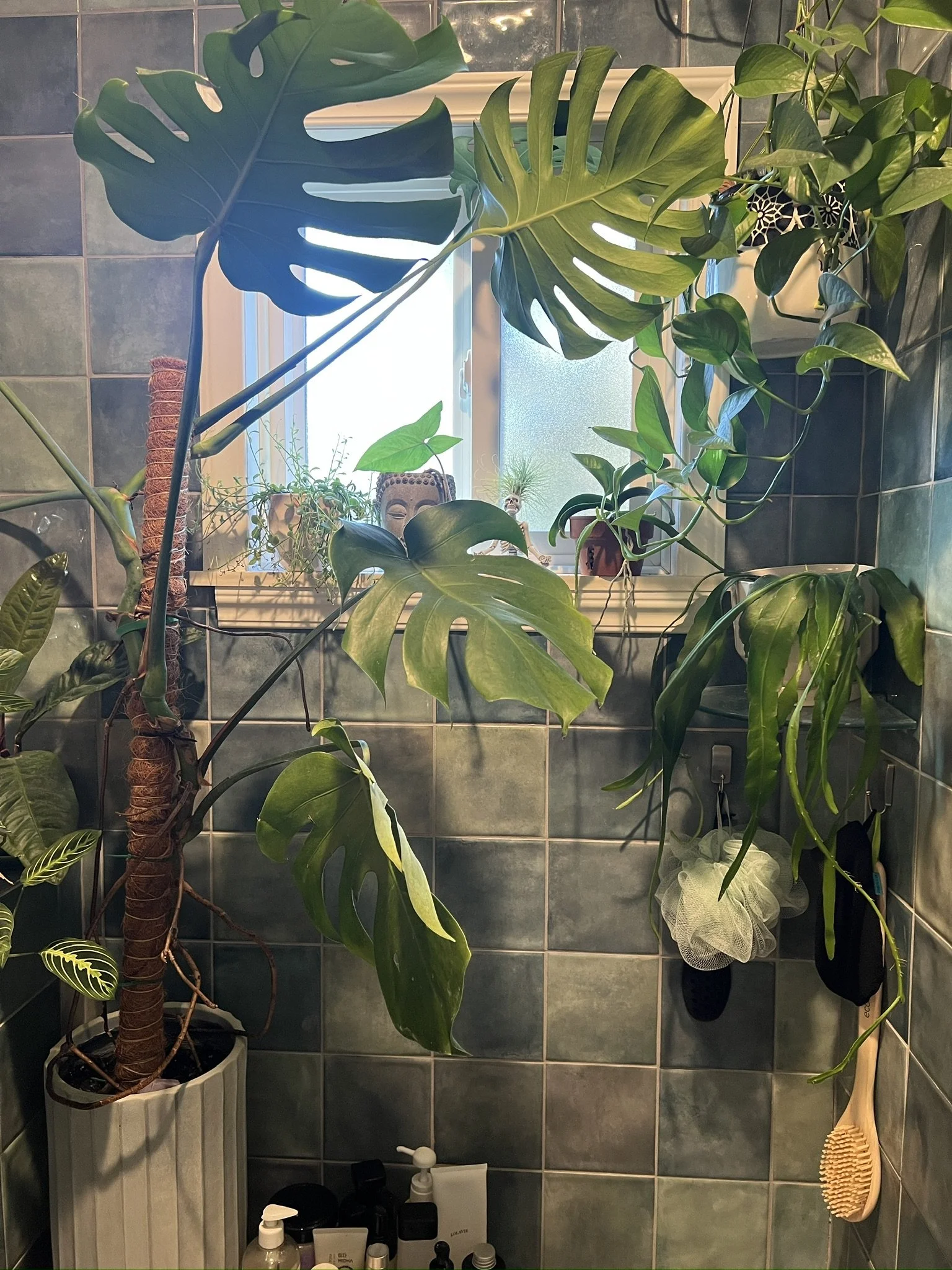
This four-year-old monstera outgrew its spot near the window and lives in the shower full time now!
Monstera are iconic houseplants, most recognizable by their large, fenestrated leaves. In my bathroom, I have two varieties; A classic Monstera deliciosa and the stunning ‘Thai Constellation’. The latter is a naturally occurring variation, with cream colored speckles across its leaves that resemble a starry night sky.
As houseplants go, Monstera are both easy to care for and strikingly decorative. They grow quickly and can reach impressive sizes. The standard M. deliciosa has a vining habit and often climbs 6–10 feet indoors. ‘Thai Constellation’ tends to stay more compact, growing 3–6 feet tall with a shrubbier form.
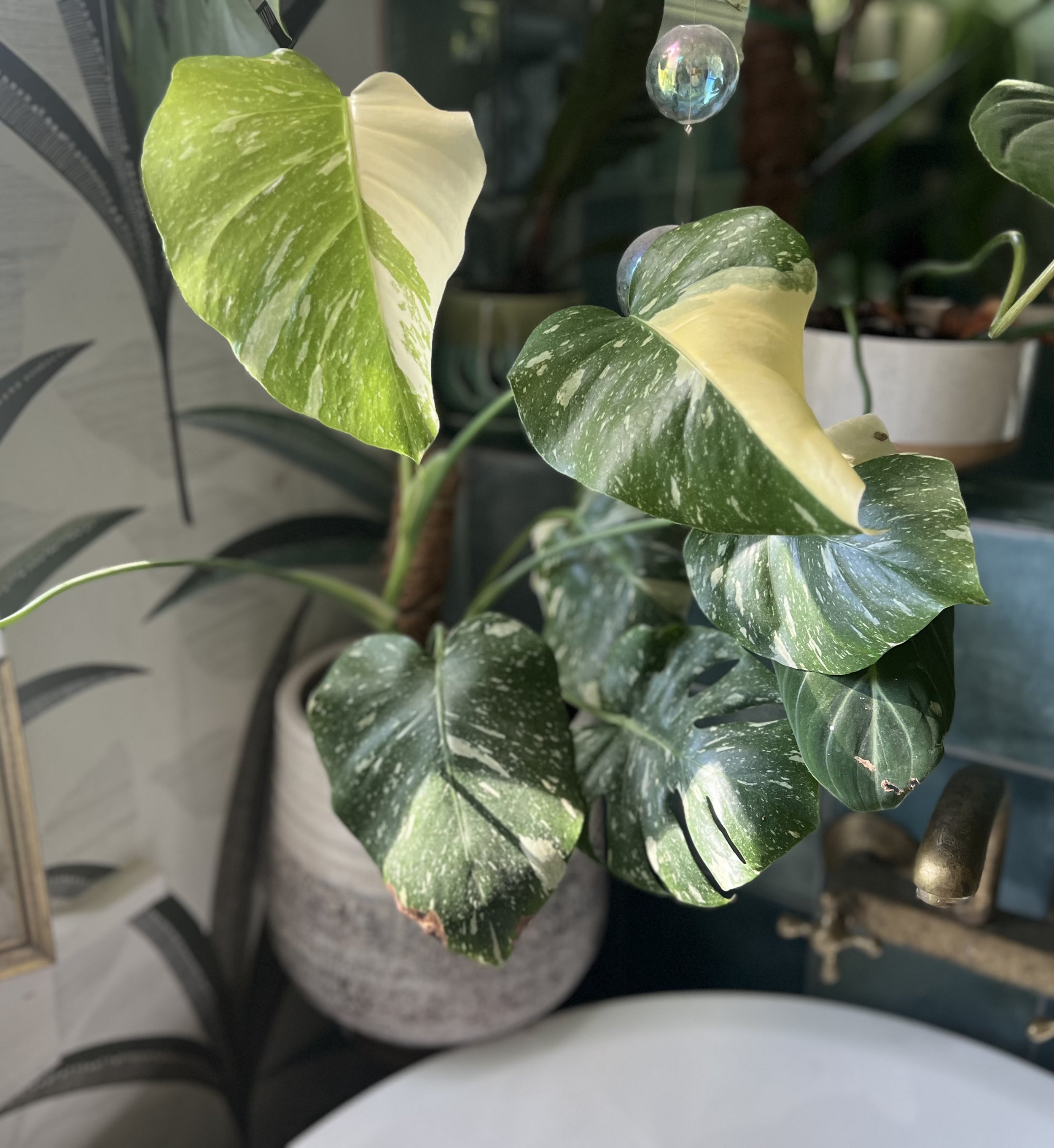
Monstera deliciosa ‘Thai Constellation’
Those characteristic holes in Monstera leaves are called fenestrations. Young plants often have smooth leaves, so if your new plant doesn’t show holes yet, don’t worry—the fenestrations will develop naturally as it matures.
Pothos ‘Pearls & Jade’
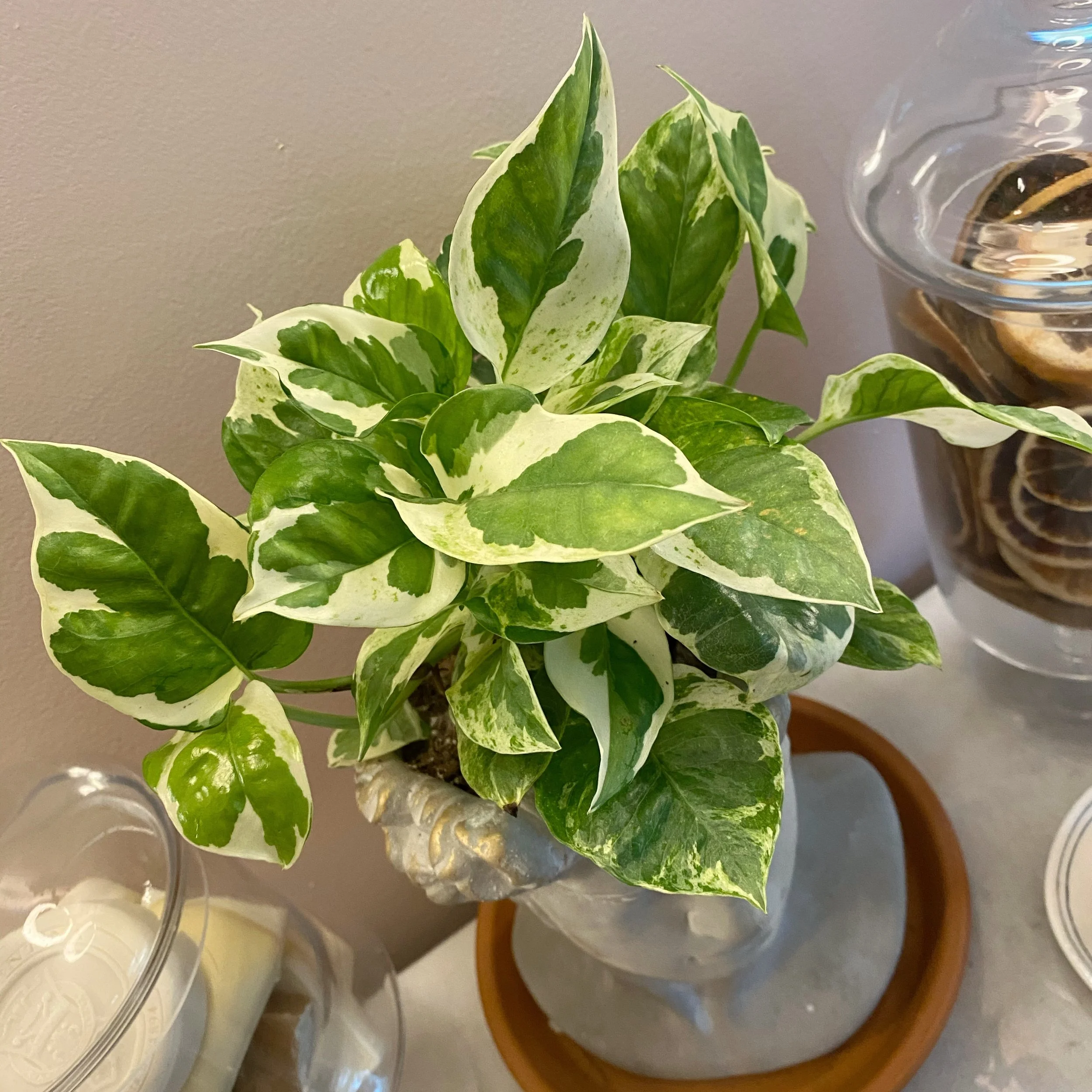
Epipremnum aureum ‘Pearls & Jade’
Any variety of pothos is great for just about any room in the house. These houseplants are among the most forgiving and versatile, and they are as happy in the bathroom as anywhere else. The added humidity will have your pothos plants looking lush and vibrant.
'Pearls & Jade' is a striking sport of another hybrid named 'Marble Queen.' It has uniquely high-contrast variegation, which makes it stand out in any houseplant collection. It prefers bright, indirect light, but is tolerant of most indoor light conditions. More light will create more vibrant variegation.
